Cannes 2010: Day 4


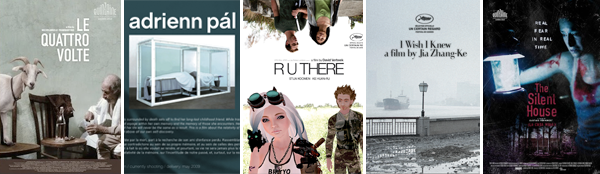
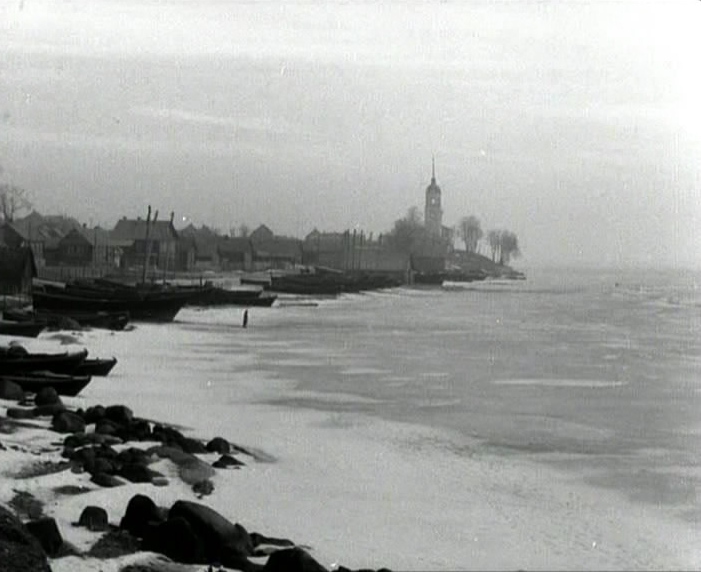
Le Quattro Volte (Directors’ Fortnight), while this is really just a refined take on what Frammartino was doing with his previous film The Gift, it is nonetheless a stronger, tighter film that is often an utterly riveting viewing experience. Frammartino’s camera grazes a rural Italian village, first following an old sheep herder around, capturing his chores and mannerisms. While much of the ‘action’ and camera framing feels like it was well-thought out and precisely placed (staged, even), the stronger moments that appear in the film are serendipitous in nature, like the spontaneous approach of a wild animal or the brakes of a parked car giving out, triggering an environmental domino effect that is so well-timed you would think that what is happening on the screen is impossible. That most of these serendipitous moments somehow fit into the loose narrative structure of the film – a Hukkle-esque circle-of-life outlook on the purpose of all persons, animals, and manufactured objects – feels so fresh that it invites a new cinematic genre for itself, a kind of ‘nature-fiction’ (nat-fi?). I was initially put off by Le Quattro Volte‘s proximity in sensibiility and themes to Pálfi’s debut, but it eclipses that film in perhaps every way, if only because it doesn’t fake it with actors and CGI. I still wish it had a more complex statement than it ends up with, but its monolithic simplicity is too compelling and original to shrug off.


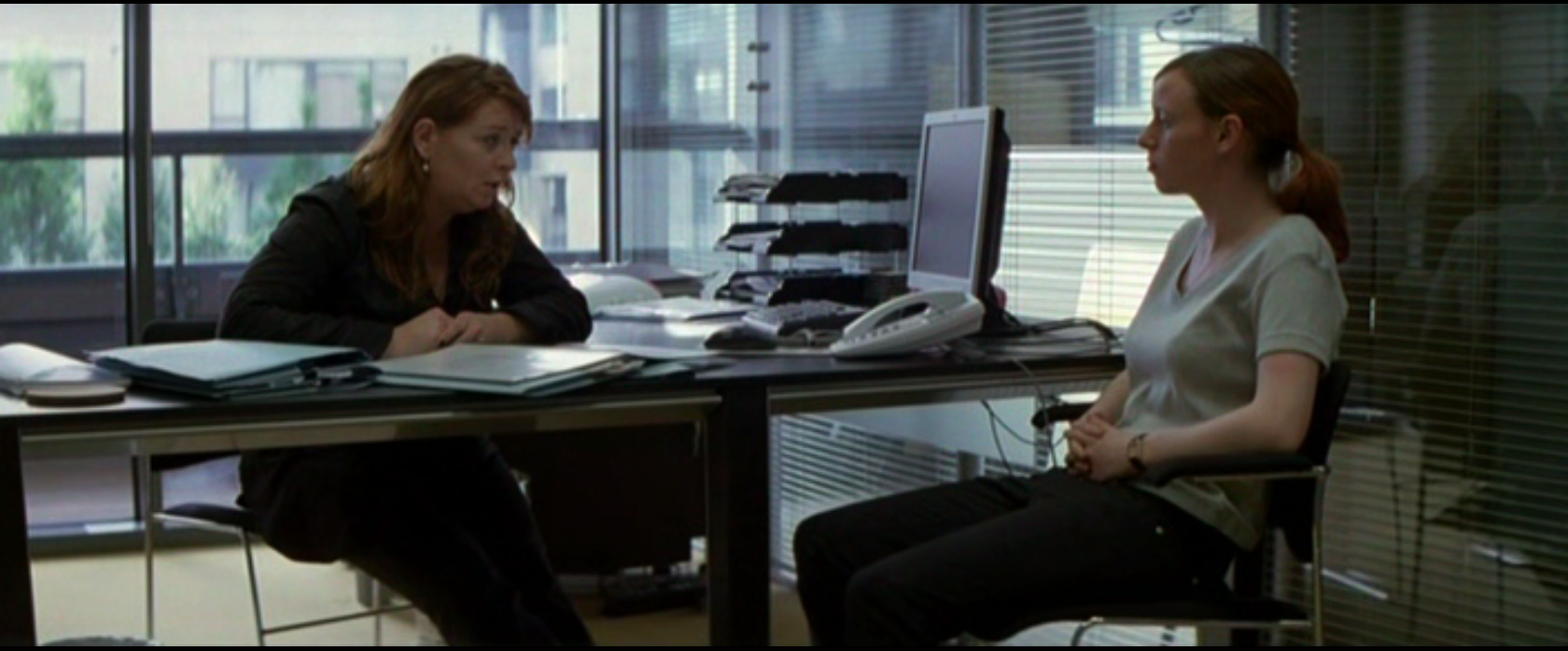
Adrienn Pál (Un Certain Regard), this would make an appropriate, if tonally redundant, double-bill with last year’s Lourdes. Both films feature near-catatonic female leads in sterile environments, progressing through their sedated lives, searching for something to uplift them. While Jessica Hausner’s film details the search for a miracle, Ágnes Kocsis’ protagonist searches for a friend. Not just any friend, but a childhood best friend named Adrienn Pál, who she’d all but forgotten until a deceased woman showed up at her ward (she is a nurse in a ward for the terminally ill) with the exact same name. This kicks off an investigation with past teachers, friends, and bullies to see if someone knows where this Adrienn girl is. The film develops quite a bit of intrigue when almost every person we meet has conflicting memories of this girl, casting doubt in our protags’ memories (sorry, again, for not knowing the character’s name), eluding to the possibility that this girl might not even exist. The manipulability of memory, and the severe importance of having a close companion in one’s life, are big ideas that the film handles reasonably well, though it draws them out so long that it can’t help but finally explicitly state, and then debunk, most of them. There is also a superfluous thread of the film which involves the rather significant obesity of the lead, who takes breaks to seclude herself in closed quarters to indulge in excessive portions of delicious looking sweets. This never really goes anywhere, and is only drawn with uninteresting cliches. In the end, Adrienn Pál doesn’t satisfy or sustain the paranoia that it so successfully spends over an hour building up, which was too bad, but there is obvious talent involved.


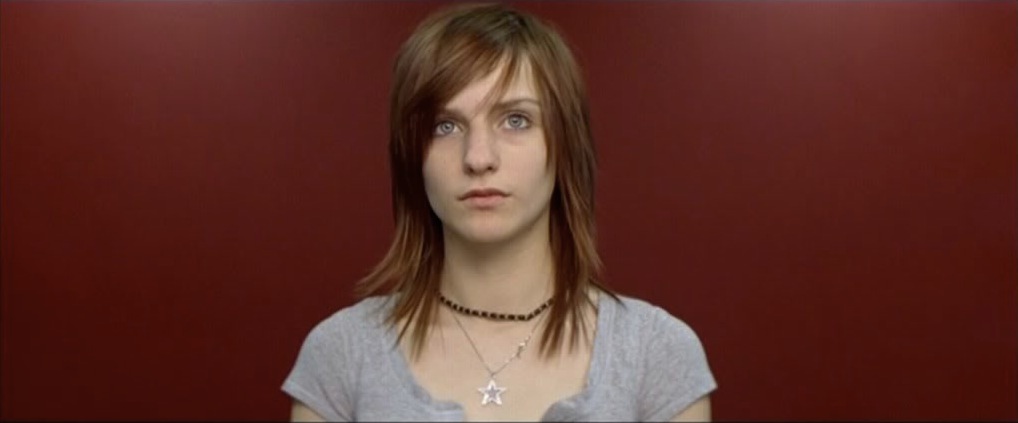
R U There? (Un Certain Regard), for a movie about a video game expert who has a crisis of reality, this was a surprisingly calm and stable viewing experience, although it is still mostly ridiculous and meanders hopelessly away from comprehension or purpose. The leader of a team of first-person shooter gamers, who are assembled for an important international competition, threatens his team’s chances when he unknowingly injures his arm in his sleep. He is forced to take a break from the team’s contests after he has a lapse in concentration during play, and uses his time off to fall in love with a prostitute who gives him massages (a lot of massages), and shows him the ways of the virtual reality sim world, “Second Life.” Most of the film from this point is saturated in computer graphics and fairies, disappearing into non-sensical dream worlds that progress neither the guys’ take on video game violence, his relationship with this prostitute, nor its central theme of the blending of realities. If Verbeek was actually trying to lull the audience into a trance so that we’d ignore that his film wasn’t going anywhere, he almost pulled it off (or maybe he did?).


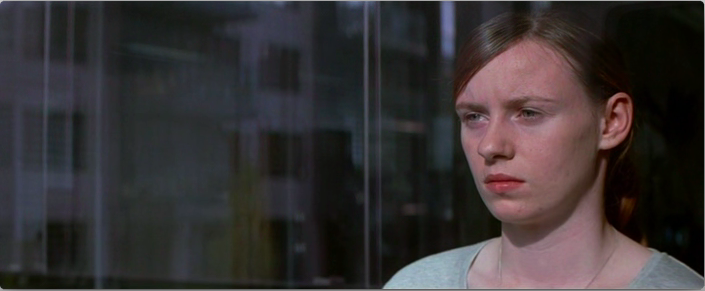
I Wish I Knew (Un Certain Regard), grand, epic, and, after the dust has settled, quite a hollow experience, I was initially pulled in by Jia’s mega tribute to Shanghai. Composed mostly of interviews, some with filmmakers and actors I recognize (including Hou Hsaio-hsien), but mostly with people unfamiliar to me, it’s 24 City without boundaries, and editing. The subjects talk about whatever comes to mind, it seems, when they are asked to think about Shanghai. Naturally, Jia inserts a fictional element, in which a young woman walks around pensively, awkwardly, perhaps visiting/re-enacting bits that correspond with what the interviewees are talking about. Also relaying back to the interviews are clips from older films that relate to the locale, many, if not all, are made by the interviewees. The film looks spectacular, feels almost encyclopedic, and there is this epic, growling anthem that plays several times throughout the film that is really stirring and moving in itself. Like most of Jia’s films, for me, the end result is too aimless for me, or I can’t sense anything to grab onto and think about after the film is over. Most of the viewing is enrapturing, though, because the filmmaking is so assured.


The Silent House (Directors’ Fortnight), despite the Bazinian orgasm of a premise – a haunted house film done in a single take via the technological allowances of digital filmmaking – this obnoxious film is devoid of even a single interesting or original contribution to the genre, save for a promisingly drawn out opening few minutes in which the lead female walks to the house. Any cliche of mainstream horror films from the last 15 years (excluding torture) are applied here: creepy little girl w/ long hair appearing out of nowhere, polaroid sounds, good guy saves the day then revealed to be psycho, et al. Also, I don’t think it is enough to claim that your film is done in one take; you have to prove it. That means that long stretches in total darkness break the illusion, and instill doubt into the very gimmick that is the film’s raison d’être. Though, to be fair, no heightened sense of space, meaningful passages of time, nor any other illusions of ‘realism’ would benefit the content of this film anyway. Lame, overused ideas are bad, no matter how they are filmed.


More Cannes Coverage:

Day 1, Day 2, Day 3, Day 4, Day 5, Day 6, Day 7, Day 8, Day 9, Day 10, Day 11

Cannes 2010: Day 4 Read More »

Cannes 2010: Day 3


Shit Year (Directors’ Fortnight), Cam Archer (who I’d always assumed was a woman, for whatever that’s worth) makes well-produced, indie, lowercase-‘a’ art films about people who are confronting getting older. His Wild Tigers I Have Known was an angst-filled, cliche-ridden look at a little gay boy who’s hot for a dim-witted douche bag, using wild tigers as metaphor for the ‘scary’ adult world. In that film and this new one, Archer never shies away from indulgent, textured, psychadelic flourishes that take our focus away from his lame script and directing abilities toward some insubstantial mega-style. Where Shit Year wins over his previous film, though, is in his casting of Ellen Barkin, who really owns this role. She’s often either completely great and hilarious as a bitter retiring actress, or struggling to elevate poorly written material. A filmmaker not so focused on making the Coolest and Best Art Movie Ever would have made a really great film with this topic and actress. In fact, if I say that there are significant similarities to early, awful Jim Jarmusch films, it will do a pretty good job of illustrating what this film is like.


The City Below (Un Certain Regard), one of the least classifiable films of the festival, Christoph Hochhäusler’s film always feels like just a generic feuding corporations thriller, and yet it also gives an impression that there is something deeper and more chilling than that going on. The plot of two merging banks is hardly important, nor, I think, is the extramarital affair between a new employee’s wife and a bank CEO. One of these two plot points may or may not trigger some kind of societal meltdown or apocalypse, fitting right in with the icy blues and silvers of the commercial buildings and monochrome suits that construct the business world. Hochhäusler has the film edited to never really let viewers know what is going on, plot-wise nor with the characters’ psyches. Striking images and moments appear and disappear without explanation, though, to the filmmaker’s credit, these moments don’t come across as pointless or random just for the sake of it. One senses a potent and important commentary on banks, and the broader financial and corporate world in general, but any clear thesis is almost impossible to discern from a single viewing. This, of course, is hardly a complaint.


Heartbeats (Un Certain Regard), I’m assuming that the official English title ‘Heartbeats,’ replacing the superior ‘Imaginary Loves,’ was chosen because it is the title of a Knife song; one that doesn’t appear in this film, although two of the most memorable sequences are set to ‘Pass This On’ and ‘Keep the Streets Empty.’ Memorable, though, does not equal good, and especially not original, in these instances. Unfortunately, Dolan’s film is stripped of the engaging plot that his I Killed My Mother had, which supported his stylistic flourishes, masking the derivative style with some substance. Dolan reportedly wrote the screenplay for this film on the 5 hour train ride from Montreal to Toronto for his debut’s screening at TIFF last September. Not Shocking. Heartbeats is a thin and translucent film that is infuriating because of the obvious talent and ambition that is required to make something like it, but which was under-utilized and altogether wasted for pretty pictures of pretty people set to pretty music, broken up with a tired story. Good imitations of Wong Kar-wai and Almodóvar do not make a good film, even if the result is entirely watchable. The plot of this film is inexcusably lame, with two ‘best friends’ going gaga over the same androgynous, ambiguously gay young man who they befriend. When the two first lay eyes on the guy, right off the bat, they are backstabbing each other to spend time alone with him, getting pouty and going into jealous rages when the other wins some time with him. In-between these melodramatic fits, we get plenty of *poetic* and *sleek* moments of our three leads walking, talking, and dancing in slow motion, all set to hip, Pitchfork-approved grooves. Also important to not forget the attempts at depth, such as the two friends’ stares at ‘the desired one,’ montaged with flashes of Greek statues and childrens drawing that he apparently resembles. It’s all shamelessly narcissistic for all three actors, and exactly the type of film a 21-year old filmmaker with an overpraised debut would make. So why all of the messianic praise? I think it is good that Dolan seems to be so prolific in his younger years so that he can get these hipster and derivative obsessions out of his system and start making some films with more thought, and, more importantly, with his own voice. He’s obviously willing to make films about themes and characters that are personal to him, so I still have faith that he’ll develop into someone who is actually worth following.


The Light Thief (Directors’ Fortnight), programmers bestowing such high praise on a filmmaker right before his film’s screening, such as, in this case, “Tati-esque,” is setting some pretty lofty expectations, all of which are not at all met in this overly silly film about a kind-hearted electrician who tries his hardest to protect his small town from the imposing leaders who want to sell off the town. The protagonist – the electrician nicknamed Mr. Light who is always trying to develop and provide means of cheaper and more efficient electricity – is, on paper, both topically relevant and charming, but the tone and performances are too haphazardly shaped and presented to give the proceedings any drama or genuine humor. A disappointment.


We Are What We Are (Directors’ Fortnight), a family of cannibals loses its patriarch – who was their sole means of acquiring food – to a freak poisoning accident while he was out ‘hunting,’ and now must fend for themselves. It’s an intriguing premise that is very refreshing among recent horror films, but, in the end, ties itself too closely to the zombie genre to fully leapfrog the pitfalls that it inevitably stumbles into. The surviving family, consisting of a neurotic mother, two sons, and a daughter, realizes their doomed fate the moment the dad is confirmed dead, but the two sons won’t have it, and set out to get some grub. While the film never attempts to explain why this family can only eat human flesh (nor does it need to, for the sake of maintaining its intriguing metaphors), it doesn’t do a very good job of addressing the inherent themes and questions that this scenario would seem to do well in exploring. Instead, the second half of the film is basically chase scene after chase scene, failed attempt after failed attempt to get some food, with bizarre, conservative humor stemming from the sons’ meal selections. Catchy premise and late startling moments aside, it’s just another Romero imitator.


More Cannes Coverage:

Day 1, Day 2, Day 3, Day 4, Day 5, Day 6, Day 7, Day 8, Day 9, Day 10, Day 11

Cannes 2010: Day 3 Read More »

Cannes 2010: Day 2


Aurora (Un Certain Regard), If there were two films that I would have swapped into the Competition, it would be this one and Picco from the Directors’ Fortnight, which I’ll get to later. I have significant issues with both films, but these were the two most provocative films I saw in Cannes, a trait that was missed in the Competition films this year (maybe the Godard would fit that category, too, but I think that one was too baffling to make anyone angry). Aurora, while still very realistic, simple, and in the end grounded in a familial crisis, stands out from most of the Romanian trend in its bleakness, austerity, and (implied) violence. For the vast majority of its three hours, we watch a man doing something. He trades who-knows-what with shady people, collects what appears to be gun parts, and glares vehemently at his co-workers and housemates. A sense of methodical evil and misanthropy is prevalent, but it’s rarely engaging, and often supremely tedious, not only because Puiu is intentionally never letting the viewer in on what the hell this guy is up to, but because this slow-paced rampage is not as chilling or seductive as I felt it aspired to be. It reminded me quite a bit of Haneke in its approach to cinematic violence, and the viewers’ roles as spectators, inquisitors, and investigators, yearning for the motivations and explanations for what drives the character to commit these crimes. Alas, in a scene that formally recalls the ending of Police, Adjective, we get a glimpse, albeit a very, very brief one, of an answer to the question we have been seeking for the last three, grueling hours: Why? The problem, though, is that by the time we’d arrived to this finger-wagging conclusion, I’d long stopped caring. I love that Puiu went all out in attempting to make a film like this, and I have no doubt that it is exactly as it was intended to be, perhaps even how it ought to be. I just wish I felt a reason to see it again, or wouldn’t feel like an asshole for recommending it to someone.


Little Baby Jesus of Flandr (Directors’ Fortnight), one of the big disappointments for me this year (which, really, considering it was a debut student film that took Birdsong and made the wise men three guys with Down syndrome (as well as pretty much every other member of the cast), is pretty inexplicable, I know). The thing is that this kind of twisted religious allegory thing, if done well, is really appealing to me, for the same reason that Birdsong was really appealing to me. Unfortunately, all of the ways that this could have been bad are very much present. The script seems to be improvised by the ‘actors’ on the spot, or were they just dicking around while Van den Berghe filmed them unknowingly? Van den Berghe seems to have spent most of his time behind the camera trying to ape the look and feel of Tarkovsky and Jodorowsky. The film is in black and white except for a non-sequitous, college-level-understanding version of Mulholland Dr.‘s Club Silencio scene that is ‘strangely’ in color. This is the only film of the festival that I was actively embarrassed for during most of the screening, knowing that the filmmaker and his exploited cast were in attendance to hear and feel their project fall flat.


The Housemaid (Competition), it’s difficult to know what to to do with it, especially since I have not seen the original 60s version. I do not know the manner in which Im’s film ‘inverts’ the original scenario (nor how the scenario in Im’s film could be inverted). I can say that its a fun genre film that doesn’t focus too much on big ideas, and goes absolutely bizerk in the final minutes, to the point where I thought I was watching a Sam Raimi film. This is in Cinemax territory in the sex department; and light on dramatic or erotic tension, but it’s amusing and insubstantially fluffy, and something I actually ENJOYED watching (see above…).


More Cannes Coverage:

Day 1, Day 2, Day 3, Day 4, Day 5, Day 6, Day 7, Day 8, Day 9, Day 10, Day 11

Cannes 2010: Day 2 Read More »

Cannes 2010: Day 1


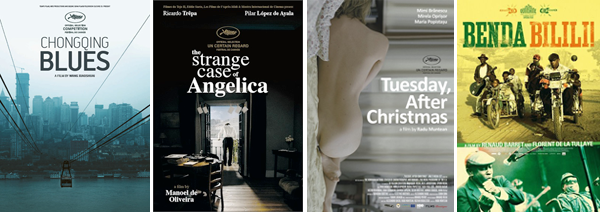
Chongqing Blues (Competition), a sappy, poorly directed Competition entry that was bumped up from Un Certain Regard late in the game, proving that quality is not the sole criterion for admittance into the Cannes spotlight. The premise – in which an absent father returns home to find out why his son took a grocery store hostage, resulting in his death – has enough of a hook that it sustained my interest through the melodrama and unpleasantness of all of the characters, namely the dead son’s mother, who makes it very well known that she is not happy, ever. When, late in the film, the father (sorry, I won’t remember most of the characters’ names for any of these films, and I’m too lazy to look them all up right now) interrogates the police officer who shot and killed his son; the point of it all, and this is the best I could do, is that sons need their fathers, and being away from one’s family for too long makes one despondent, irrational, and generally submissive. Unfortunately, for these characters, I didn’t give a damn.


The Strange Case of Angelica (Un Certain Regard), Manoel de Oliveira will never make an uninteresting film, if only because of how much depth they gain just from one’s knowledge of his age, lending each progressive film a complexity that they perhaps wouldn’t inherently have. What the film does have, though: lush, deep focus photography; peculiar detached acting and speech patterns of the characters; and strange scenarios that only get stranger as the film progresses. de Oliveira has always made, and will make, solid films. But I often have trouble with them in the same way that I have trouble with most filmmakers with his level of prolificacy; the work feels like well-made sketches rather than fully formed, genuinely complex ideas. The set-up for Angelica is certainly intriguing. Accompanied by gorgeous long-takes and a sensuous piano score, there is a magic realist occurrence that sets the plot into play, and gives the film its title. There are wonderful scenes of artists at work, nature at play, and grand, celestial discussions. In fact, I love most things about the content of this film, but have a hard time recommending it based off of one viewing, where it leaves me with small moments rather than the operatic whole like Benilde did. It will be one of a very small handful that I’ll probably check out again in Toronto, as I anticipate the pieces coming together on repeat viewings.


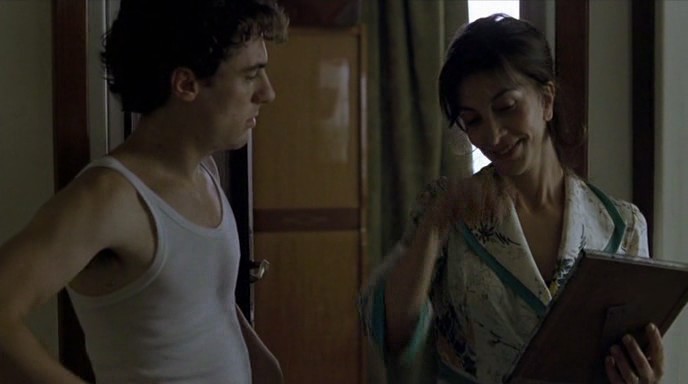
Tuesday, After Christmas (Un Certain Regard), a pleasant early surprise. Somehow Radu Muntean has stayed in the background of the Romanian wave, or is simply just a late-comer. Continuing the Romanian tradition of drawing out a mundane set of events in an extremely compelling and well-drawn realism, Tuesday has perhaps the most banal premise yet: a married man has an affair. While it is completely riveting, this banality initially had me dismissing the film as a minor entry from a group of filmmakers who know how to make compelling naturalism, but few films at the festival stayed with me the way this one did. While the description, “an extramartial affair, Romanian style,” will actually give someone a remarkably accurate description of what this film looks like and how the events unfold, it’s the unexpected gestures and emotional discoveries that make it a must-see. (possibly minor spoilers) The three central characters – the cheating father, his wife and his mistress – are refreshingly dynamic and multi-dimensional for the roles they have: the father manages to remain sympathetic despite ‘ruining’ the life of a seemingly nice and put-together wife, who herself maintains an iciness before and after the revelation of the affair. When she is taken completely by surprise, recalling earlier moments that are actually quite fucked up in retrospect, there is still a balance in the scenario that can only be attributed to how human they feel to the viewer. Similarly, the woman who the father has fallen in love with is neither portrayed as the beast who tore the loving family apart, nor the seductive savior for an unhappy man; she is, while younger, just another woman who makes this guy happy, not mature-for-her-age, nor obviously more compatible. The drama in the film almost stems from this kind of surreal ordinariness, its lack of an unusual situation (this is not to say that extramarital affairs are a ‘usual situation,’ just that among the ways that this type of affair can manifest itself, it doesn’t get any more straight-forward than this). The closing scene is likely the exception to this, in which the couple try to preserve the final moments of their daughter’s fantasy world of happy families and Santa Claus. It’s a stellar finale, simultaneously graceful and heartbreakingly pessimistic.

It’s also notable the way that the current Romanian big shots use their titles as a type of mapping. 4 Months…, 12:08, and Tuesday suggest intriguing temporal charts that, while simple, strip the drama away from the key events that takes place at their specific moments in time, and stress the time both before and after the titular moments (this is certainly also true of Lazarescu, whose death is always inevitable, and the least dramatic moment of that film).


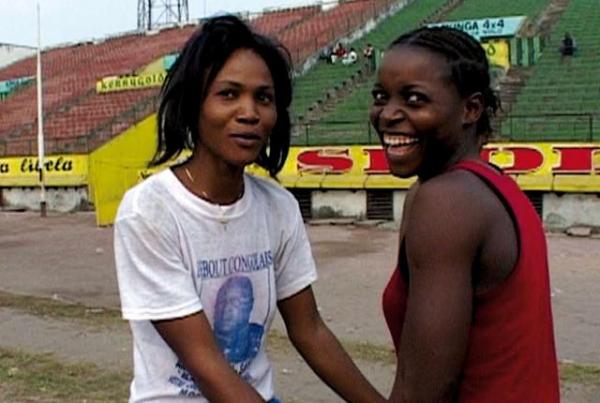
Benda Bilili! (Directors’ Fortnight), essentially the same film as this directing duo’s previous doc Jupiter’s Dance, only with a more interesting and more talented group of musicians as the subject. The film finds a nice balance between harsh politicial criticism, depressing slum life, vibrant jam sessions, and DIY creative processes. It’s certainly a feel-good movie, one that I didn’t object to feeling good for. But, given that this film took 5 years to make, I would have hoped for a more thorough and balanced look at this disabled musical collective, as well as something that amounted to more than a triumph-over-poverty message that films like this so typically settle on. Whatever, though, I had a good time with it.


More Cannes Coverage:

Day 1, Day 2, Day 3, Day 4, Day 5, Day 6, Day 7, Day 8, Day 9, Day 10, Day 11

Cannes 2010: Day 1 Read More »

This Cannes’ past in pictures (UPDATED with additions)

Also known as, What Have You Done For Me Lately?

UPDATED: Line-up for the Official Selection is completed, and the Director’s Fortnight has been announced.


—————————————————————————————————————————————————–

    Competition Films


2010 Film: Tournée (On Tour) – Mathieu Amalric
Previous film: Wimbledon Stage (2001)


2010 Film: Des hommes et des dieux (Of Gods and Men) – Xavier Beauvois
Previous Film: The Young Lieutenant (2005)


2010 Film: Hors-la-loi (Outside the Law) – Rachid Bouchareb
Previous Film: London River (2009)


2010 Film: Biutiful – Alejandro González Iñárritu
Previous Film: Babel (2006)


2010 Film: A Screaming Man – Mahamat-Saleh Haroun
Previous Film: Dry Season (2006)


2010 Film: The Housemaid – Sang-soo Im
Previous Film: The Old Garden (2006)


2010 Film: Certified Copy – Abbas Kiarostami
Previous Film: Shirin (2008)


2010 Film: Outrage – Takeshi Kitano
Previous Film: Achilles and the Tortoise (2008)


2010 Film: Poetry – Chang-dong Lee
Previous Film: Secret Sunshine (2007)


2010 Film: Another Year – Mike Leigh
Previous Film: Happy-Go-Lucky (2008)


2010 Film: Fair Game – Doug Liman
Previous Film: Jumper (2008)


2010 Film: My Joy – Sergei Loznitsa
Previous Film: Revue (2008)


2010 Film: La Nostra Vita (Our Life) – Daniele Luchetti
Previous Film: My Brother Is an Only Child (2007)


2010 Film: Burnt By the Sun 2: Exodus – Nikita Mikhalkov
Previous Film: 12 (2007)


2010 Film: Tender Son – The Frankenstein Project – Kornél Mondruczó
Previous Film: Delta (2008)


2010 Film: La Princesse de Montpensier – Bertrand Tavernier
Previous Film: In the Electric Mist (2009)


2010 Film: Uncle Boonmee Who Can Recall His Past Lives – Apichatpong Weerasethakul
Previous Film: Syndromes and a Century (2006)


2010 Film: : Rizhao Chongqing (Chongqing Blues) – Xiaoshuai Wang
Previous Film: In Love We Trust (2007)


——————————————————————————————————————————————————-

    Un Certain Regard


2010 Film: Blue Valentine – Derek Cianfrance
Previous Film: none


2010 Film: O estranho caso de Angelica (Angelica) – Manoel de Oliveira
Previous Film: Eccentricities of a Blond Hair Girl (2009)


2010 Film: Les amours imaginaires (Heartbeats) – Xavier Dolan
Previous Film: I Killed My Mother (2009)


2010 Film: Los Labios (The Lips) – Iván Fund, Santiago Loza
Previous Film (Iván Fund) : The Laugh (2009)

Previous Film (Santiago Loza): The Invention of Flesh (2009)


2010 Film: Simon Werner a disparu… (Simon Werner is Missing…) – Fabrice Gobert
Previous Film: none


2010 Film: Film Socialisme – Jean-Luc Godard
Previous Film: Notre musique (2004)


2010 Film: Unter Dir Die Stadt (The City Below) – Christoph Hochhäusler
Previous Film: I Am Guilty (2005)


2010 Film: Ha Ha Ha – Sang-soo Hong
Previous Film: Like You Know It All (2009)


2010 Film: I Wish I Knew – Jia Zhang ke
Previous Film: 24 City (2008)


2010 Film: Rebecca H. (Return to the Dogs) – Lodge Kerrigan
Previous Film: Keane (2004)


2010 Film: Pál Adrienn (Adrienn Pál) – Ágnes Kocsis
Previous Film: Fresh Air (2006)


2010 Film: Udaan – Vikramaditya Motwane
Previous Film: none


2010 Film: Marti Dupa Craciun (Tuesday, After Christmas) – Radu Muntean
Previous Film: Boogie (2008)


2010 Film: Chatroom – Hideo Nakata
Previous Film: L: Change the World (2008)


2010 Film: Aurora – Cristi Puiu
Previous Film: The Death of Mr. Lazarescu (2005)


2010 Film: Life Above All – Oliver Schmitz
Previous Film: Hijack Stories (2000)


2010 Film: Carancho – Pablo Trapero
Previous Film: Lion’s Den (2008)


2010 Film: Octubre – Daniel Vega
Previous Film: none


2010 Film: R U There – David Verbeek
Previous Film: Shanghai Trance (2008)


——————————————————————————————————————————————————-

    Directors’ Fortnight


2010 Film: The Joy – Marina Méliande & Felipe Bragança
Previous Film: A Fuga, a Raiva, a Danca, a Bunda, a Boca, a Calma, a Vida da Mulher Gorila (2009)


2010 Film: All Good Children – Alicia Duffy
Previous Film: none


2010 Film: Everything Will Be Fine – Christoffer Boe
Previous Film: Offscreen (2006)


2010 Film: Leap Year – Michael Rowe
Previous Film: none


2010 Film: Benda Bilili! – Renaud Barret & Florent de la Tullaye
Previous Film: Victoire Terminus, Kinshasa (2008)


2010 Film: The Silent House – Gustavo Hernandez
Previous Film: none


2010 Film: Cleveland Vs. Wall Street – Jean-Stéphane Bron
Previous Film: Mon frère se marie (2006)


2010 Film: Young Girls In Black – Jean-Paul Civeyrac
Previous Film: Through the Forest (2005)


2010 Film: The Wanderer – Avishai Sivan
Previous Film: none


2010 Film: Illegal – Olivier Masset-Depasse
Previous Film: Cages (2006)


2010 Film: The Light Thief – Aktan Arym Kubat
Previous Film: The Chimp (2001)


2010 Film: Little Baby Jesus of Flandr – Gust Van den Berghe
Previous Film: none


2010 Film: The Invisible Eye – Diego Lerman
Previous Film: Meanwhile (2006)


2010 Film: Picco – Philip Koch
Previous Film: none


2010 Film: Lily Sometimes – Fabienne Berthaud
Previous Film: Frankie (2005)


2010 Film: Le Quattro Volte -Michelangelo Frammartino
Previous Film: The Gift (2003)


2010 Film: Shit Year – Cam Archer
Previous Film: Wild Tigers I Have Known (2006)


2010 Film: We Are What We Are – Jorge Michel Grau
Previous Film: none


2010 Film: Tiger Factory – Woo Ming Jin
Previous Film: 15Malaysia (2009)


2010 Film: Todos vós sodes capitáns – Oliver Laxe
Previous Film: none


2010 Film: Two Gates of Sleep – Alistair Banks Griffin
Previous Film: none


2010 Film: Love Like Poison – Katell Quillévéré
Previous Film: none


This Cannes’ past in pictures (UPDATED with additions) Read More »

Passe mon bac d’abord

I’m all kinds of too busy lately. I dolled up this blog a few months ago and I’ve barely touched it except for the occasional list or bit on James Benning. It’s frustrating. The truth is I’ve been swallowed up by a class on Michael Snow at the University of Toronto. My life has become a long stream of Elder, Sitney, Fried, and Michelson. I’m loving the material, though; and, I’ve finally gotten to see 16mm prints of Wavelength and La région centrale (twice! (the second of which was rocky; not a film to watch at 9AM)). But more than Michael Snow, I’m finally getting familiar with a huge chunk of avant-garde cinema that I’d been ashamedly unacquainted with. I plan on posting a few entries on some of the material that has really stunned me toward the end of the semester.

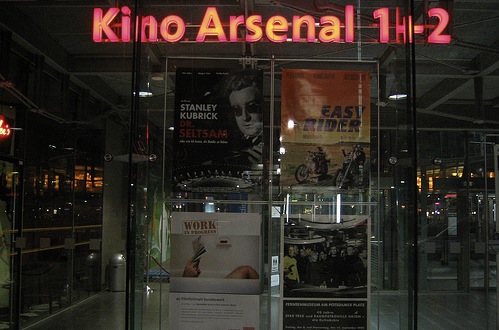
I’m also in the process of solidifying a June internship at Kino Arsenal in Berlin, which I couldn’t be more excited for. Nothing is set in stone yet; it’s all sort of stumbling into place. It’s still in its infant stages of organization, but if it happens, I’ll have some…thing up on here as that plays out as well.

I’ve also somehow managed to make some work in the last couple of months that I think is interesting, and I’ll be sending some of it out in the next couple of months to some programs that I probably have no business even hoping for, but I’m keeping my fingers crossed. I won’t mention that again unless something comes of it. I have some of the work hidden away online for viewing if anyone wants to take a look, but I’m not making it public so that I can still apply for certain events that prohibit that kind of thing.

In mean time I’m spending most of my free time at the Cinematheque. Their ‘Best of the Decade’ program, which is about to wrap up any day now, has allowed me to catch up on some titles I’d missed (Beau travail, L’intrus, In Praise of Love, Longing, Three Times, Platform) or been meaning to revisit (Werckmeister Harmonies) or vowed to never not see on the big screen whenever I have a chance to (Syndromes and Century, Tropical Malady). What I learned from all of this: Claire Denis and Apichatpong are two of the best we’ve got, I do not think I will ever ‘get’ late Godard (nor most of the early stuff) despite how pretty it really is, and standard-definition, non-anamorphic, interlaced transfers should be avoided at all cost for any Bela Tarr film.

And speaking of Decade summations, I will make one at the end of the year, to give all of 2009, and what I’ve missed from years previous, a chance.

Passe mon bac d’abord Read More »

Diskussionsprotokoll: Ruhr

The following is filmmaker Sven Ilgner’s account of the Q&A session which occurred at Duisburger Filmwoche on November 2, 2009 where James Benning’s new film Ruhr premiered (taken from a PDF which can be downloaded here).


***Also on Ruhr, here is a spectacular audio interview with Benning about the making of the film.***


Montag, 02. November 2009, 20.00 Uhr

33. DUISBURGER FILMWOCHE Diskussionsprotokoll

Podium: (Regie) James Benning
(Moderation) Werner Ruzicka

Unfortunately the discussion begins with an apology. Werner Ruzicka is sorry for the technical
problems, which had occurred while the film was shown. Despite that, he points out that James
Benning’s screening of Ruhr has surely been a precious and impressing opening for the 33rd
filmweek.

What was the original attraction? Why the Ruhr Valley?

James Benning felt familiar with the location. Having grown up in an industrial and working class
environment like Milwaukee, he noticed an immediate connection to the working class area Ruhr
Valley. The author normally works on films about places he knows very well. Since this was not
the case in Ruhr, his approach was slightly different. He got to know the places while putting
them on digital video. Ruhr is not a portrait, but rather a ‘deep map’ on HD.

Benning is aware of the fact that his films can be difficult for the audience. The process might not
reveal itself, if you are not used to absorbing the images deeply. A viewer has to be open to
working on the image he sees. It forces you to compare what you see and hear to what you know.
It forces you to find what is inside you. It is hard work.

How were the images finally chosen?

James Benning’s film now contains six shots. The original number was around 20. Including the
Rhine River and more parts of the steel mill. In the end, only a limited number of the images were
really ‘speaking’ to him.

What about the possible extension of time because of the format digital video?

James Benning reminds the audience of 16mm reels with a maximum time of 11 minutes. Ruhr is
his first work on HD video. With modern card storage systems, he could soon be able to shoot a
four hour shot. ‘This doesn’t necessarily mean I do it,’ but it makes life easier. Especially in
cases like the coke tower shot: It lasts one hour. In reality, 1 ½ hours had passed by. An
important part was the dissolving from day to night. So the author decided to manipulate. He
speeded up the sunset. Secretly. He used video’s ability to ‘completely hide the ellipse of time.’

James Bennings manipulations are taking a different route. He is manipulating to achieve more
truthfulness. The iterations of steaming differ from 10 to 20 minutes. By showing a shot of one
hour length, the author gives the possibility to undergo the process of waiting. You can find your
own kind of rhythm. It is about anticipation, waiting and expectations. It is what you see in the
picture, because you find it in yourself.

James Benning offers his view into the future: HD is the end of filmmaking as we know it. With
better resolution, but fewer distribution costs, we will see works that are far more real and less
nostalgic. In consequence we have to ‘embrace HD.’ A deeper view into the topic can be found in
James Benning’s article on www.dock-duisburg.de. There will also be a DVD collection with his
works. The filmmuseum Vienna has taken care of some of his (also unseen) films. Benning is not
keen on being a capitalistic scrooge. He is planning to digitize his work and therefore to offer his
films for free to be downloadable in the internet.

The different images are being discussed. With time and attention given, you can share Benning’s
sensation of vulnerability and fear in the first shot. One might feel trapped in the tunnel. The
man on the bicycle offers a comic relief. A floating autumn leaf ends the image. A flying plastic
bag had already opened it. The tunnel shot works in a very narrative way.

One viewer is curious about the ‘music’ in the first shot. Astonishingly it is the sound that
occurred in the moment and not composed music. We can hear trains crossing and whistling. The
blowing whistles really appear as if they were arranged, composed for the shot.

Werner Ruzicka is looking for metaphors. Does the author accept an interpretation of isolation
and loneliness?

James Benning agrees by saying that there are loaded images. There is an airplane, praying
muslims and a tower. After three weeks of editing, he realized a possible connection and was quite
shocked about what he had created. Due to media’s education and the people’s general memory,
strongly prejudiced interpretations are possible.

One member of the audience found his own connections between all six shots. In his view the
images are all dissolving themselves. Nevertheless he is doubtful and calls his idea possibly
‘klugscheißerisch’ (in German). As an example, Benning chooses to talk about the cleaning of the
Serra sculpture. There are many possible interpretations. It all depends on the viewers knowledge
and access. Who decides in the end, what is art? One who doesn’t know Richard Serra’s work
might consider the destruction of the graffiti paintings a brutal act. One might simply dismiss the
image and wait for the next one. James Benning shares with the audience that he is very aware of
the confusion his images provoke. Everybody’s own history and thoughts make the image. It is
hard work.

The author also reveals the manipulations in the Essen street shot. Benning cut out several
persons, made the moment less active. He emptied the street. A viewer expresses his amazement
that in this particular shot you can hardly hear the Autobahn, which is 300meter away from the
location. Benning: ‘You have to watch it in another theatre!’ It would have to be a screening
without a ‘gremlin’ inside the projector. The participants agree in their sadness about the sound
problems of the screening. There was no way of avoiding it. Gremlins just happen.

Sven Ilgner

Diskussionsprotokoll: Ruhr Read More »

Top 10 Films of 2010

This list, will be updated each time I see a film that had its world premiere in 2010 and is better than at least one of the films already on the list.

  1. Certified Copy (Abbas Kiarostami)
  2. Cave of Forgotten Dreams (Werner Herzog)
  3. Marwencol (Jeff Malmberg)
  4. Uncle Boonmee Who Can Recall His Past Lives (Apichatpong Weerasethakul)
  5. Meek’s Cutoff (Kelly Reichardt)
  6. Tuesday, After Christmas (Radu Muntean)
  7. Exit Through the Gift Shop (Banksy)
  8. Blue Valentine (Derek Cianfrance)
  9. Silent Souls (Aleksei Fedorchenko)
  10. The Robber (Benjamin Heisenberg)


My Top 10 Discoveries During 2010 (applies to films made before the 21st century)

  1. Irma Vep (1996, Olivier Assayas)
  2. Primate (1974, Frederick Wiseman)
  3. Steamboat Bill, Jr. (1928. Buster Keaton)
  4. Grand Opera: An Historical Romance (1977, James Benning)
  5. S:TREAM:S:S:ECTION:S:ECTION:S:S:ECTIONED (1971, Paul Sharits)
  6. Greed (1924, Erich von Stroheim)
  7. Buffalo ’66 (1998, Vincent Gallo)
  8. Beau Travail (1999, Claire Denis)
  9. ‘Rameau’s Nephew’ by Diderot (Thanx to Dennis Young) by Wilma Schoen (1982, Michael Snow)
  10. A Moment of Innocence (1996, Mohsen Makhmalbaf)


Other 2010 films I’ve seen

  • Leap Year (Michael Rowe) – 7.2
  • You Are Here (Daniel Cockburn) – 7.2
  • The City Below (Christoph Hochhäusler) – 7.1
  • Film Socialism (Jean-Luc Godard) – 7.1
  • Hahaha (Hong Sangsoo) – 7.1
  • Attenberg (Athina Rachel Tsangari) – 7.0
  • The Trip (Michael Winterbottom) – 6.9
  • Catfish (Schulman & Joost) – 6.9
  • Le quattro volte (Michelangelo Frammartino) – 6.8
  • How Do You Know (James L. Brooks) – 6.8
  • Promises Written in Water (Vincent Gallo) – 6.6
  • Empire North (Jakob S. Boeskov) – 6.5
  • Beginners (Mike Mills) – 6.5
  • The Arbor (Clio Barnard) – 6.5
  • Tabloid (Errol Morris) – 6.5
  • Guest (José Luis Guerín) – 6.5
  • The Sleeping Beauty (Catherine Breillat) – 6.4
  • Putty Hill (Matthew Porterfield) – 6.4
  • The Secret World of Arrietty (Hiromasa Yonebayashi) – 6.4
  • My Joy (Sergei Loznitsa) – 6.4
  • Black Venus (Abdellatif Kechiche) – 6.4
  • How I Ended This Summer (Alexei Popogrebsky) – 6.3
  • Another Year (Mike Leigh) – 6.3
  • Over Your Cities Grass Will Grow (Sophie Fiennes) – 6.3
  • Soundtracker (Nick Sherman) – 6.3
  • Benda Bilili! (Florent de la Tullaye & Renaud Barret) – 6.3
  • Shutter Island (Martin Scorsese) – 6.2
  • Young Girls in Black (Jean Paul Civeyrac) – 6.2
  • Senna (Asif Kapadia) – 6.2
  • Kaboom (Gregg Araki) – 6.2
  • Black Swan (Darren Aronofsky) – 6.2
  • Brownian Movement (Nanouk Leopold) – 6.2
  • Cameraman: The Life and Work of Jack Cardiff (Craig McCall) – 6.2
  • Buried (Rodrigo Cortés) – 6.1
  • I Wish I Knew (Jia Zhang-ke) – 6.1
  • A Useful Life (Federico Veiroj) – 6.1
  • Cold Weather (Aaron Katz) – 6.1
  • Toy Story 3 (Lee Unkrich) – 6.1
  • Of Gods and Men (Xavier Beauvois) – 6.1
  • Please Give (Nicole Holofcener) – 6.0
  • The Social Network (David Fincher) – 6.0
  • Boxing Gym (Frederick Wiseman) – 6.0
  • Scott Pilgrim vs. the World (Edgar Wright) – 6.0
  • 127 Hours (Danny Boyle) – 6.0
  • Picco (Philip Koch) – 6.0
  • The Strange Case of Angelica (Manoel de Oliveira) – 5.9
  • Autobiography of Nicolae Ceausescu (Andrei Ujica) – 5.9
  • Orly (Angela Schanelec) – 5.9
  • Oki’s Movie (Hong Sang-soo) – 5.8
  • Festival (Jean-Claude Rousseau) – 5.8
  • Carlos (Olivier Assayas) – 5.8
  • The Myth of the American Sleepover (David Robert Mitchell) – 5.8
  • Never Let Me Go (Mark Romanek) – 5.8
  • Poetry (Lee Chang-dong) – 5.8
  • Sex Magic, Manifesting Maya (Eric Liebman & Jonathan Schell) – 5.8
  • El Bulli: Cooking in Progress (Gereon Wetzel) – 5.7
  • Tiny Furniture (Lena Dunham) – 5.7
  • The Joy (Felipe Bragança & Marina Meliande) – 5.7
  • Audrey the Trainwreck (Frank V. Ross) – 5.7
  • Step Up 3D (Jon M. Chu) – 5.6
  • Post Mortem (Pablo Larrain) – 5.6
  • Sensation (Tom Hall) – 5.6
  • If I Want to Whistle, I Whistle (Florin Serban) – 5.6
  • Fair Game (Doug Liman) – 5.6
  • Lily Sometimes (Fabienne Berthaud) – 5.6
  • Chantrapas (Otar Iosseliani) – 5.5
  • Jackass 3D (Jeff Tremaine) – 5.5
  • Two Gates of Sleep (Alistair Banks Griffin) – 5.5
  • Winter’s Bone (Debra Granik) – 5.4
  • On Tour (Mathieu Amalric) – 5.4
  • The Embrace of the River (Nicolas Rincon Gilles) – 5.4
  • Rebecca H. (Return to the Dogs) (Lodge Kerrigan) – 5.3
  • Curling (Denis Côté) – 5.3
  • Somewhere (Sofia Coppola) – 5.3
  • Udaan (Vikramaditya Motwane) – 5.3
  • The Depths (Ryûsuke Hamaguchi) – 5.2
  • Nostalgia for the Light (Patricio Guzmán) – 5.2
  • Harry Potter and the Deathly Hallows: Part 1 (David Yates) – 5.2
  • Carancho (Pablo Trapero) – 5.2
  • Adrienn Pál (Ágnes Kocsis) – 5.1
  • Free Radicals: A History of Experimental Film (Pip Chodorov) – 5.1
  • LENNONYC (Michael Epstein)- 5.1
  • 13 Assassins (Takashi Miike) – 5.1
  • Outbound (Bogdan George Apetri) – 5.0
  • At Night, They Dance (Isabelle Lavigne & Stéphane Thibault) – 5.0
  • The Housemaid (Im Sangsoo) – 5.0
  • The Bully Project (Lee Hirsch) – 5.0
  • Rabbit Hole (John Cameron Mitchell) – 5.0
  • Salt (Phillip Noyce) – 5.0
  • The Wanderer (Avishai Sivan) – 5.0
  • The Peddler (Eduardo de la Serna, Lucas Marcheggiano, Adriana Yurcovich) – 5.0
  • Honey (Semih Kaplanoğlu) – 4.9
  • A Screaming Man (Mahamat-Saleh Haroun) – 4.9
  • Studies for the Decay of the West (Klaus Wyborny) – 4.9
  • Norwegian Wood (Tran Anh Hung) – 4.9
  • The Princess of Montpensier (Bertrand Tavernier) – 4.9
  • Hubble 3D (Toni Myers) – 4.8
  • The Lips (Ivan Fund & Santiago Loza) – 4.8
  • Tears of Gaza (Vibeke Løkkeberg) – 4.8
  • Mysteries of Lisbon (Raul Ruiz) – 4.7
  • Aurora Cristi Puiu) – 4.7
  • The Ditch (Wang Bing) – 4.7
  • Summer of Goliath (Nicolás Pereda) – 4.6
  • !Women Art Revolution – A Secret History (Lynn Hershman-Leeson) – 4.6
  • Inside Job (Charles Ferguson) – 4.6
  • Happy People: A Year in the Taiga (Dmitry Vasyukov & Werner Herzog) – 4.5
  • R U There (David Verbeek) – 4.5
  • Family Instinct (Andris Gauja) – 4.5
  • Father (José María de Orbe) – 4.4
  • Tender Son – The Frankenstein Project (Kornél Mondruczó) – 4.4
  • The Tourist (Florian Henckel von Donnersmarck) – 4.4
  • Biutiful (Alejandro González Iñárritu) – 4.4
  • Howl (Rob Epstein & Jeffrey Friedman) – 4.4
  • The Ghost Writer (Roman Polanski) – 4.3
  • Rubber (Quentin Dupieux) – 4.3
  • Morgen (Marian Crisan) – 4.2
  • Beyond the Black Rainbow (Panos Cosmatos) – 4.2
  • The Illusionist (Sylvain Chomet) – 4.2
  • Anything You Want (Achero Mañas) – 4.2
  • All Good Children (Alicia Duffy) – 4.2
  • Heartbeats (Xavier Dolan) – 4.0
  • Route 132 (Louis Bélanger) – 4.0
  • Revolución (Carlos Reygadas, Gael García Bernal, Mariana Chenillo, Patricia Riggen, Fernando Eimbcke, Amat Escalante, Rodrigo García, Diego Luna, Gerardo Naranjo, & Rodrigo Plá) – 4.0
  • Erotic Man (Jørgen Leth) – 3.9
  • Illegal (Olivier Masset-Depasse) – 3.9
  • Shit Year (Cam Archer) – 3.9
  • True Grit (Joel & Ethan Coen) – 3.8
  • TRON: Legacy (Joseph Kosinski) – 3.8
  • Our Life (Daniele Luchetti) – 3.8
  • Cirkus Columbia (Danis Tanovic) – 3.8
  • Greenberg (Noah Baumbach) – 3.7
  • Mamma Gógó (Fridrik Thor Fridriksson) – 3.7
  • Inception (Christopher Nolan) – 3.6
  • Nainsukh (Amit Dutta) – 3.6
  • Home For Christmas (Bent Hamer) – 3.6
  • Jack Goes Boating (Philip Seymour Hoffman) – 3.5
  • The Last Circus (Alex de la Iglesia) – 3.5
  • Cold Fish (Sion Sono) – 3.4
  • All Things Were Now Overtaken by Silence (Nicolás Pereda) – 3.3
  • We Are What We Are (Jorge Michel Grau) – 3.3
  • Better Mus’ Come (Storm Saulter) – 3.3
  • Chongqing Blues (Xiaoshuai Wang) – 3.2
  • Route Irish (Ken Loach) – 3.2
  • What I Most Want (Delfina Castagnino) – 3.1
  • Women Will Come: Feminists Redefining Pornography (Joanne Loton) – 3.1
  • Everything Will Be Fine (Christoffer Boe) – 3.0
  • The Light Thief (Aktan Arym Kubat) – 2.8
  • Incendies (Denis Villeneuve) – 2.8
  • October (Daniel & Diego Vega) – 2.7
  • You All Are Captains (Oliver Laxe) – 2.6
  • The Tree (Julie Bertucelli) – 2.5
  • Legend of the Fist: The Return of Chen Zhen (Andrew Lau) – 2.4
  • Outrage (Takeshi Kitano) – 2.3
  • Robinson in Ruins (Patrick Keiller) – 2.3
  • The Tiger Factory (Ming Jin Woo) – 2.2
  • Little Baby Jesus of Flandr (Gust Van den Berghe) – 2.0
  • ANPO (Linda Hoaglund) – 2.0
  • Lights Out (Fabrice Gobert) – 1.8
  • The Silent House (Gustavo Hernández) – 1.2
  • Dirty Girl (Abe Sylvia) – 0.9

Top 10 Films of 2010 Read More »

2010 Film Log

Past Logs

2009 Film Log
2007 Film Log


*8mm/16mm/35mm/70mm denotes that what I saw was a film print.
*DP denotes that what I saw was a Digital Projection in a theatre (ie. Avatar 3D, or Los Angeles Plays Itself) either because the film doesn’t exist on celluloid, it was shown in 3D, or the theatre where I saw it is run by incompetent penny pinchers.
*All others were either from DVDs, downloads, or television.
*Only films that are at least 40 minutes long (the Academy’s minimum for a feature film) are logged.
*A grade of “Inc.” denotes that I don’t think that this screening was an accurate enough presentation of the film for me to make a value judgment, either because their weren’t English subtitles for a foreign language film, or the projector broke/sound cut out/the print burned, or an ass in the theatre distracted me with too much talking/cellphone usage, or, like the incident with 2001: A Space Odyssey at the Coolidge Corner Theatre in Brookline, MA, the reels are out of order.
*Regarding W/Os, I almost always finish what I start, and what I don’t, I don’t log.
*A ‘+’ at the beginning of a line means that I had seen this film before.


January

The 5,000 Fingers of Dr. T (1953, Roy Rowland) – 6.5

Eden is West (2009, Costa-Gavras) – 6.0

Moon (2009, Duncan Jones) – 5.0

Broken Embraces (2009, Pedro Almodóvar) – 6.7

Like You Know it All (2009, Hong Sang-soo) – 5.7

+Funny Games (1997, Michael Haneke) – 7.4

Samson & Delilah (2009, Warwick Thornton) – 1.9

That Day (2003, Raoul Ruiz) – 6.1

La Danse: The Paris Opera Ballet (2009, Frederick Wiseman) – 5.4

Helen (2008, Joe Lawlor & Christine Molloy) – 4.5

Whatever Works (2009, Woody Allen) – 6.0

+A Christmas Tale (2008, Arnaud Desplechin) – 7.8

No One Knows About Persian Cats (2009, Bahman Ghobadi) – 5.9

A Serious Man (2009, Joel & Ethan Coen) – 6.6

The Bad Lieutenant: Port of Call – New Orleans (2009, Werner Herzog) 35mm – 4.9

The Road (2009, John Hillcoat) – 4.6

Bluebeard (2009, Catherine Breillat) – 7.0

Private Fears in Public Places (2006, Alain Resnais) – 5.4

The Lovely Bones (2009, Peter Jackson) – 0.9

Le Pont des Artes (2004, Eugène Green) – 7.6

Birth (2004, Jonathan Glazer) – 7.5

Summit Circle (2007, Bernard Émond) – 6.1

+The White Ribbon (2009, Michael Haneke) 35mm– 6.6

Optical Illusions (2009, Cristián Jimenez) – 5.6

Momma’s Man (2008, Azazel Jacobs) – 5.3

La Donation (2009, Bernard Émond) 35mm – 6.4

Grand Opera: An Historical Romance (1978, James Benning) 16mm – 8.7

+Wavelength (1967, Michael Snow) 16mm – 9.3

Platform (2000, Jia Zhangke) 35mm – 4.5

+Tropical Malady (2004, Apichatpong Weerasethakul) 35mm – 8.5

+Syndromes and a Century (2006, Apichatpong Weerasethakul) 35mm – 9.6

La Région Centrale (1971, Michael Snow) 16mm – 7.6

Drums Along the Mohawk (1939, John Ford) 35mm – 6.2

Three Times (2005, Hou Hsiao-Hsien) 35mm – 5.8


February

Morvern Callar (2002, Lynne Ramsay) – 5.9

Friday Night (2002, Claire Denis) – 7.4

Sita Sings the Blues (2008, Nina Paley) – 5.4

Presents (1981, Michael Snow) 16mm – 6.9

<—> (1969, Michael Snow) 16mm – 6.2

Beau travail (1999, Claire Denis) 35mm – 8.3

The Intruder (2004, Claire Denis) 35mm – 4.7

+Who’s Camus Anyway? (2005, Mitsuo Yanagimachi) – 5.5

All About Eve (1950, Joseph L. Mankiewicz) – 6.8

+Werckmeister Harmonies (2000, Béla Tarr) 35mm – 7.9

+La Région Centrale (1971, Michael Snow) 16mm – 7.2

+Beau travail (1999, Claire Denis) 35mm – 8.2

+The Gleaners and I (2000, Agnès Varda) – 8.5

The Informant! (2009, Steven Soderbergh) – 6.3

+Paris, Texas (1984, Wim Wenders) – 6.0

Late Marriage (2001, Dover Koshashvili) – 5.9

Longing (2006, Valeska Grisebach) 35mm – 4.4

Shutter Island (2010, Martin Scorsese) 35mm – 6.2

Boy A (2007, John Crowley) – 4.0

In Praise of Love (2001, Jean-Luc Godard) 35mm – 5.5

American Graffiti (1973, George Lucas) – 3.6

The King of Escape (2009, Alain Guiraudie) – 4.8

Reverberlin (2006, Michael Snow) DP – 4.5

À nos amours (1983, Maurice Pialat) – 7.6

Film About a Woman Who… (1974, Yvonne Rainer) 16mm – 5.0

+Revanche (2008, Götz Spielmann) – 7.5

Afterschool (2008, Antonio Campos) – 8.2

+The Prestige (2006, Christopher Nolan) – 8.0

Whip It (2009, Drew Barrymore) – 5.6


March

Katalin Varga (2009, Peter Strickland) – 5.5

Los Angeles Plays Itself (2003, Thom Andersen) DP – 4.3

To Be and To Have (2002, Nicolas Philibert) – 6.3

Henri-Georges Clouzot’s Inferno (2009, Berge Bromberg & Ruxandra Medrea) DP – 6.2

Robinson in Space (1997, Patrick Keiller) 35mm – 3.7

+Presents (1981, Michael Snow) – 7.4

The Declic Years (1984, Raymond Depardon) 35mm – 3.6

Tearoom (2007, William E. Jones) – 6.7

*Corpus Callosum (2002, Michael Snow) – Inc. (~7.9) [no sound on my bootleg after the 40-min. mark]

A Tale of the Wind (1988, Joris Ivens & Marceline Loridan) 35mm – 6.1

A Grin Without a Cat (1977, Chris Marker) 35mm – 4.0

So Is This (1982, Michael Snow) – 7.5

Poto and Cabengo (1980, Jean-Pierre Gorin) 35mm – 5.7

Everyone Else (2009, Maren Ade) 35mm – 7.0

Zidane: A 21st Century Portrait (2006, Douglas Gordon & Philippe Parreno) – 5.6

Mid-August Lunch (2008, Gianni Di Gregorio) – 5.2

+A Serious Man (2009, Joel & Ethan Coen) – 5.6

+Fantastic Mr. Fox (2009, Wes Anderson) – 7.2

‘Rameau’s Nephew’ by Diderot (Thanx to Dennis Young) by Wilma Schoen (1974, Michael Snow) – 8.2

American Dreams (lost and found) (1984, James Benning) – 5.8

The Innocents (1961, Jack Clayton) – 5.5

Transmission (2008, Harun Farocki) – 6.7

The Holy Girl (2004, Lucrecia Martel) – 6.4

Bigger Than Life (1956, Nicholas Ray) – 7.1

Kodak (2006, Tacita Dean) – 2.4

Muriel (1963, Alain Resnais) – 5.6

Law of Desire (1987, Pedro Almodóvar) – 6.3

+Police, Adjective (2009, Corneliu Porumboiu) – 7.8

The Meetings of Anna (1978, Chantal Akerman) – 6.0

+Wild Grass (2009, Alain Resnais) – 8.4

The General (1926, Buster Keaton) – 7.6

Kinetta (2005, Giorgos Lanthimos) – 3.1

+Wild Grass (2009, Alain Resnais) – 8.4


April

I Went To the Zoo the Other Day (2009, Luo Li) DP – 2.7

My Kid Could Paint That (2007, Amir Bar-Lev) – 7.3

Beeswax (2009, Andrew Bujalski) – 6.2

The Man Who Sleeps (1974, Bernard Queysanne) – 6.6

Unmade Beds (2009, Alexis Dos Santos) – 5.6

Los (2004, James Benning) – 6.3

+Afterschool (2008, Antonio Campos) – 8.3

Blood Wedding (1981, Carlos Saura) – 6.1

In the Bathtub of the World (2001, Caveh Zahedi) – 6.7

Carmen (1983, Carlos Saura) – 5.8

Keane (2004, Lodge Kerrigan) – 4.6

Woman is the Future of Man (2004, Hong Sang-soo) – 4.9

El Amor Brujo (1986, Carlos Saura) – 6.2

ABC Africa (2001, Abbas Kiarostami) – 5.5

P.opular S.ky (2009, Ryan Trecartin) DP – 6.9

The Wolfberg Family (2009, Axelle Ropert) 35mm – 5.3

Craneway Event (2009, Tacita Dean) 16mm – 4.4

Blockade (2006, Sergei Loznitsa) – 6.7

Through the Forest (2005, Jean-Paul Civeyrac) – 6.0

Wild Tigers I Have Known (2006, Cam Archer) – 2.9

The Gift (2003, Michelangelo Frammartino) – 5.6

Jupiter’s Dance (2006, Renaud Barret & Florent de la Tullaye) – 3.9

Cages (2006, Olivier Masset-Depasse) – 3.5

Frankie (2005, Fabienne Berthaud) – 5.7

General Orders No. 9 (2009, Robert Persons) Hot Docs, DP – 2.0

Disco and Atomic War (2009, Jaak Kilmi) Hot Docs, DP – 4.1


May

The Invention of Dr. NakaMats (2009, Kaspar Astrup Schröder) Hot Docs, DP – 5.6

Waste Land (2009, Lucy Walker, Karen Harley, & João Jardim) Hot Docs, DP – 3.1

Mark (2009, Mike Hoolboom) Hot Docs, DP – 4.9

Into Great Silence (2005, Philip Gröning) Hot Docs, 35mm – 6.4

Farewell (2009, Ditteke Mensink) Hot Docs, DP – 5.7

The Peddler (2010, Eduardo de la Serna, Lucas Marcheggiano, Adriana Yurcovich) Hot Docs, DP – 5.0

Sex Magic, Manifesting Maya (2010, Eric Liebman & Jonathan Schell) Hot Docs, DP – 5.8

Soundtracker (2010, Nick Sherman) Hot Docs, DP – 6.7

I Shot My Love (2010, Tomer Heymann) Hot Docs, DP – 7.1

Marwencol (2010, Jeff Malmberg) Hot Docs, DP – 7.9

Exit Through the Gift Shop (2010, Banksy) 35mm – 7.5

Chongqing Blues (2010, Wang Xiaoshuai) Cannes, 35mm – 3.2

The Strange Case of Angelica (2010, Manoel de Oliveira) Cannes, 35mm – 5.9

Tuesday, After Christmas (2010, Radu Muntean) Cannes, 35mm – 7.3

Benda Bilili! (2010, Florent de la Tullaye & Renaud Barret) Cannes, 35mm – 6.3

Aurora (2010, Cristi Puiu) Cannes, 35mm – 4.7

Little Baby Jesus of Flandr (2010, Gust Van den Bergh) Cannes, DP – 2.1

The Housemaid (2010, Im Sangsoo) Cannes, 35mm – 5.0

Shit Year (2010, Cam Archer) Cannes, 35mm – 3.9

The City Below (2010, Christoph Hochhäusler) Cannes, 35mm – 6.0

Heartbeats (2010, Xavier Dolan) Cannes, 35mm – 4.0

The Light Thief (2010, Aktan Arym Kubat) Cannes, 35mm – 2.8

We Are What We Are (2010, Jorge Michel Grau) Cannes, 35mm – 3.3

Le Quattro Volte (2010, Michelangelo Frammartino) Cannes, 35mm – 6.8

Pál Adrienn (2010, Ágnes Kocsis) Cannes, 35mm – 5.1

R U There (2010, David Verbeek) Cannes, 35mm – 4.5

I Wish I Knew (2010, Jia Zhangke) Cannes, DP – 6.5

The Silent House (2010, Gustavo Hernández) Cannes, DP – 1.2

Film Socialisme [Navajo subtitles] (2010, Jean-Luc Godard) Cannes, DP – 4.7

Carancho (2010, Pablo Trapero) Cannes, DP – 5.6

The Wanderer (2010, Avishai Sivan) Cannes, 35mm – 5.0

Everything Will Be Fine (2010, Christoffer Boe) Cannes, 35mm – 3.0

A Screaming Man (2010, Mahamat-Saleh Haroun) Cannes, 35mm – 4.9

Two Gates Of Sleep (2010, Alistair Banks Griffin) Cannes, DP – 5.4

Certified Copy (2010, Abbas Kiarostami) Cannes, 35mm – 7.2

The Lips (2010, Ivan Fund & Santiago Loza) Cannes, DP – 4.8

Young Girls In Black (2010, Jean Paul Civeyrac) Cannes, 35mm – 6.2

Blue Valentine (2010, Derek Cianfrance) Cannes, DP – 7.5

You All Are Captains (2010, Oliver Laxe) Cannes, 35mm – 2.9

All Good Children (2010, Alicia Duffy) Cannes, 35mm – 4.2

+Certified Copy (2010, Abbas Kiarostami) Cannes, 35mm – 8.2

October (2010, Daniel & Diego Vega) Cannes, 35mm – 2.7

Udaan (2010, Vikramaditya Motwane) Cannes, 35mm – 4.9

Poetry (2010, Lee Chang-dong) Cannes, 35mm – 5.8

Lights Out (2010, Fabrice Gobert) Cannes, DP – 1.8

The Joy (2010, Felipe Bragança & Marina Meliande) Cannes, DP – 5.7

Picco (2010, Philip Koch) Cannes, 35mm – 6.0

Lily Sometimes (2010, Fabienne Berthaud) Cannes, DP – 5.9

Uncle Boonmee Who Can Recall His Past Lives (2010, Apichatpong Weerasethakul) Cannes, 16mm – 7.8

Rebecca H. (Return to the Dogs) (2010, Lodge Kerrigan) Cannes, DP – 5.3

The Tiger Factory (2010, Ming jin Woo) Cannes, DP – 2.7

Hahaha (2010, Hong Sang-soo) Cannes, 35mm – 7.1

Tender Son – The Frankenstein Project (2010, Kornél Mondruczó) Cannes, 35mm – 4.4

Route Irish (2010, Ken Loach) Cannes, 35mm – 3.2

The Princess of Montpensier (2010, Bertrand Tavernier) Cannes, 35mm – 4.9

My Joy (2010, Sergei Loznitsa) Cannes, 35mm – 6.4

Of Gods and Men (2010, Xavier Beauvois) Cannes, DP – 6.0

On Tour (2010, Mathieu Amalric) Cannes, 35mm – 5.4

The Tree (2010, Julie Bertucelli) Cannes, DP – 2.5

I Am Guilty (2005, Christoph Hochhäusler) – 6.5


June

Double Tide (2009, Sharon Lockhart) DP – 4.4

Macunaíma (1969, Joaquim Pedro de Andrade) DP – 6.0

Primate (1974, Frederick Wiseman) 35mm – 8.8

Evolution of a Filipino Family (2004, Lav Diaz) DP – 5.5

Bus 174 (2002, José Padilha) 35mm – 5.9

The Exploding Girl (2009, Bradley Rust Gray) DP – 4.8

+Battleship Potemkin (1925, Sergei Eisenstein) 35mm – Inc. (~4.7) [no English subs on print]

Othello (1922, Dimitri Buchowetzki) 35mm – 4.6

Garrincha, Joy of the People (1963, Joaquim Pedro de Andrade) DP – 5.0

I Love You Phillip Morris (2009, Glenn Ficarra & John Requa) 35mm – 3.7

A Wedding Suit (1976, Abbas Kiarostami) – 5.2

Bled Number One (2006, Rabah Ameur-Zaïmeche) 35mm – 1.7

A Lake (2008, Philippe Grandrieux) – 5.8

From the East (1993, Chantal Akerman) 35mm – 6.7

Over There (2006, Chantal Akerman) DP – Inc. (~5.3) [no English subs on print]

Coal Money (2008, Wang Bing) DP – 6.0

Pickpocket (1959, Robert Bresson) 35mm – 5.9

The Ghost Writer (2010, Roman Polanski) 35mm – 4.3

Soi Cowboy (2008, Thomas Clay) – 6.3

Sleep Furiously (2008, Gideon Koppel) – 3.4

The Mouth of the Wolf (2009, Pietro Marcello) – 6.1


July

Winter Soldier (1972, Winterfilm, Inc.) DP – 6.4

Irma Vep (1996, Olivier Assayas) – 8.5

I Can’t Sleep (1994, Claire Denis) – 6.2

Kinatay (2009, Brillante Mendoza) – 5.7

Notre Musique (2004, Jean-Luc Godard) – 5.8

Carrie (1976, Brian De Palma) – 4.6

Attack of the 50 Ft. Woman (1993, Christopher Guest) – 1.0

Cry-Baby (1990, John Waters) – 4.9

+Hot Fuzz (2007, Edgar Wright) – 6.0

Accattone (1961, Pier Paolo Pasolini) 35mm – 3.6

Medea (1969, Pier Paolo Pasolini) 35mm – 5.3

Theorem (1968, Pier Paolo Pasolini) 35mm – 6.9

Mamma Roma (1962, Pier Paolo Pasolini) 35mm – 5.6

Toy Story 3 (2010, Lee Unkrich) 3D – 6.1

Winter’s Bone (2010, Debra Granik) 35mm – 5.4

Greenberg (2010, Noah Baumbach) – 3.7

The Gospel According to St. Matthew (1964, Pier Paolo Pasolini) 35mm – 1.6

City Girl (1930, F.W. Murnau) – 6.7

Boogie (2008, Radu Muntean) – 7.0

Those Who Love Me Can Take the Train (1998, Patrice Chéreau) – 4.3

Inception (2010, Christopher Nolan) 70mm – 3.9

This Very Moment (2003, Christoph Hochhäusler) – 6.0

M (1931, Fritz Lang) – 7.8

Stagecoach (1939, John Ford) – 4.8

Mystery Train (1989, Jim Jarmusch) – 6.8

+Inception (2010, Christopher Nolan) 35mm – 3.6

Jumper (2008, Doug Liman) – 5.3

Metropolitan (1990, Whit Stillman) – 6.6

Man Is Not a Bird (1965, Dušan Makavejev) – 6.0

Love Affair, or The Case of the Missing Switchboard Operator (1967, Dušan Makavejev) – 5.6

Innocence Unprotected (1968, Dušan Makavejev) – 7.3

Salt (2010, Phillip Noyce) 35mm – 5.0

Steamboat Bill, Jr. (1928, Buster Keaton & Charles Reisner) – 8.7

Walkabout (1971, Nicolas Roeg) – 7.4


August

+Face (2009, Tsai Ming-liang) – 7.7

Experience (1973, Abbas Kiarostami) – 6.2

+Bigger Than Life (1956, Nicholas Ray) – 7.1

Brewster McCloud (1970, Robert Altman) – 6.6

Make Way For Tomorrow (1937, Leo McCarey) – 7.8

At Sea (2007, Peter Hutton) – 6.5

Citizen Ruth (1996, Alexander Payne) – 8.1

Les Vampires (1915, Louis Feuillade) – 7.2

+Irma Vep (1996, Olivier Assayas) – 8.9

Rubber (2010, Quentin Dupieux) – 4.3

+The Host (2006, Bong Joon-ho) – 6.2

Crumb (1994, Terry Zwigoff) – 6.0

The Night of the Hunter (1955, Charles Laughton) 35mm – 7.1

The Devils (1971, Ken Russell) DP – 4.9


September

Morgen (2010, Marian Crisan) Festival des Films du Monde, 35mm – 4.2

Chantrapas (2010, Otar Iosseliani) Festival des Films du Monde, 35mm – 5.5

If I Want to Whistle, I Whistle (2010, Florin Serban) – 5.6

+Uncle Boonmee Who Can Recall His Past Lives (2010, Apichatpong Weerasethakul) – 7.8

+Film Socialism [no subtitles] (2010, Jean-Luc Godard) TIFF, DP – 7.1

Legend of the Fist: The Return of Chen Zhen (2010, Andrew Lau) TIFF, 35mm – 2.4

Cirkus Columbia (2010, Danis Tanovic) TIFF, 35mm – 3.8

Brownian Movement (2010, Nanouk Leopold) TIFF, 35mm – 6.2

Erotic Man (2010, Jørgen Leth) TIFF, 35mm – 3.9

+Le Quattro Volte (2010, Michelangelo Frammartino) TIFF, 35mm – 6.8

What I Most Want (2010, Delfina Castagnino) TIFF, DP – 3.1

+Ruhr (2009, James Benning) TIFF, DP – 7.0

Route 132 (2010, Louis Bélanger) TIFF, 35mm – 4.0

!Women Art Revolution – A Secret History (2010, Lynn Hershman-Leeson) TIFF, DP – 4.6

The Illusionist (2010, Sylvain Chomet) TIFF, DP – 4.2

Mamma Gógó (2010, Fridrik Thor Fridriksson) TIFF, 35mm – 3.7

The Trip (2010, Michael Winterbottom) TIFF, DP – 6.9

Tears of Gaza (2010, Vibeke Løkkeberg) TIFF, 35mm – 4.8

ANPO (2010, Linda Hoaglund) TIFF, DP – 2.0

Norwegian Wood (2010, Tran Anh Hung) TIFF, DP – 4.9

The Sleeping Beauty (2010, Catherine Breillat) TIFF, DP – 6.4

Leap Year (2010, Michael Rowe) TIFF, 35mm – 7.2

The Last Circus (2010, Alex de la Iglesia) TIFF, DP – 3.5

Cave of Forgotten Dreams (2010, Werner Herzog) TIFF, 3D – 8.0

The Ditch (2010, Wang Bing) TIFF, DP – 4.7

Promises Written in Water (2010, Vincent Gallo) TIFF, 35mm – 6.6

Sensation (2010, Tom Hall) TIFF, 35mm – 5.6

Dirty Girl (2010, Abe Sylvia) TIFF, DP – 0.9

Meek’s Cutoff (2010, Kelly Reichardt) TIFF, 35mm – 6.7

Over Your Cities Grass Will Grow (2010, Sophie Fiennes) TIFF, DP – 6.3

Outbound (2010, Bogdan George Apetri) TIFF, 35mm – 5.0

Anything You Want (2010, Achero Mañas) TIFF, 35mm – 4.2

Home For Christmas (2010, Bent Hamer) TIFF, 35mm – 3.6

Oki’s Movie (2010, Hong Sang-soo) TIFF, DP – 5.8

Autobiography of Nicolae Ceausescu (2010, Andrei Ujica) TIFF, DP – 5.9

Cold Fish (2010, Sion Sono) TIFF, 35mm – 3.4

Silent Souls (2010, Aleksei Fedorchenko) TIFF, 35mm – 7.4

Kaboom (2010, Gregg Araki) TIFF, DP – 6.2

Guest (2010, José Luis Guerín) TIFF, 35mm – 6.5

A Useful Life (2010, Federico Veiroj) TIFF, 35mm – 6.1

Summer of Goliath (2010, Nicolás Pereda) TIFF, 35mm – 4.6

Attenberg (2010, Athina Rachel Tsangari) TIFF, 35mm – 7.0

You Are Here (2010, Daniel Cockburn) TIFF, DP – 7.7

Mysteries of Lisbon (2010, Raul Ruiz) TIFF, DP – 4.7

L’Avventura (1960, Michelangelo Antonioni) 35mm – 7.1

+Videodrome (1983, David Cronenberg) 35mm – 6.5

Chronicle of a Summer (1961, Edgar Morin & Jean Rouch) 35mm – 6.0

Catfish (2010, Henry Joost & Ariel Schulman) DP – 6.9

+Uncle Boonmee Who Can Recall His Past Lives (2010, Apichatpong Weerasethakul) 16mm – 7.8

The Edge of the World (1937, Michael Powell) – 5.8

How I Ended This Summer (2010, Aleksei Popogrebsky) – 6.3


October

The Social Network (2010, David Fincher) DP – 6.0

+Wavelength (1967, Michael Snow) 16mm – 9.3

Jack Goes Boating (2010, Philip Seymour Hoffman) 35mm – 3.5

Never Let Me Go (2010, Mark Romanek) 35mm – 5.8

Greed [140-minute version] (1924, Erich von Stroheim) 35mm – 8.4

Howl (2010, Rob Epstein & Jeffrey Friedman) 35mm – 4.4

Finis terrae (1929, Jean Epstein) – 4.1

+Where is the Friend’s Home? (1987, Abbas Kiarostami) – 9.0

Apocalypse Now [Redux] (1979, Francis Ford Coppola) DP – 5.2

River of Grass (1994, Kelly Reichardt) – 5.6

The Forest (2009, Piotr Dumala) – 3.3

A Moment of Innocence (1996, Mohsen Makhmalbaf) – 8.2

Backstairs (1921, Leopold Jessner & Paul Leni) – 6.8

Voyage to Italy (1954, Roberto Rossellini) 35mm – 5.9

+Blue Velvet (1986, David Lynch) 35mm – 8.5

+Pather Panchali (1955, Satyajit Ray) 35mm – 5.5

+And Life Goes On… (1991, Abbas Kiarostami) – 6.7

My Son, My Son, What Have Ye Done (2009, Werner Herzog) – 5.6

S:TREAM:S:S:ECTION:S:ECTION:S:S:ECTIONED (1971, Paul Sharits) 16mm – 8.6

Twilight of a Woman’s Soul (1913, Yevgeni Bauer) – 6.2

After Death (1915, Yevgeni Bauer) – 4.8

The Dying Swan (1917, Yevgeni Bauer) – 6.3

All That Jazz (1979, Bob Fosse) – 7.1

Children of Paradise (1945, Marcel Carné) 35mm – 7.8

The Killing (1956, Stanley Kubrick) 35mm – 7.5

Written on the Wind (1956, Douglas Sirk) 35mm – 7.0

L’Atalante (1934, Jean Vigo) 35mm – 4.9

The Cabinet of Dr. Caligari (1920, Robert Wiene) 35mm – 6.1

+Citizen Kane (1941, Orson Welles) 35mm – 8.0

+Citizen Ruth (1996, Alexander Payne) – 7.4


November

Sweet Movie (1974, Dusan Makavejev) – 3.2

+Nashville (1975, Robert Altman) 35mm – 9.1

Metropolis (1927, Fritz Lang) DP – 7.8

Berlin: Symphony of a Great City (1927, Walter Ruttmann) – 5.2

+The Nun (1966, Jacques Rivette) – 8.3

The Birth of a Nation (1915, D.W. Griffith) 35mm – 4.7

Demonlover (2002, Olivier Assayas) – 7.3

Bonnie and Clyde (1967, Arthur Penn) – 7.6

Singin’ in the Rain (1952, Stanley Donen & Gene Kelly) 35mm – 6.7

Sunrise (1927, F.W. Murnau) – 7.6

Earth (1930, Aleksandr Dovzhenko) 35mm – 6.0

The River (1929, Frank Borzage) – 5.6

Different From the Others (1919, Richard Oswald) – 4.8

The Robber (2010, Benjamin Heisenberg) – 7.5

The Eleventh Year (1928, Dziga Vertov) – 5.1

Contempt (1963, Jean-Luc Godard) – 6.6

Chinatown (1974, Roman Polanski) – 6.9

Bringing Up Baby (1938, Howard Hawks) 35mm – 7.4

Buffalo ’66 (1998, Vincent Gallo) – 8.2

Enter the Void (2009, Gaspar Noé) – 5.7


December

The White Balloon (1995, Jafar Panahi) 35mm – 6.0

The Man Who Laughs (1928, Paul Leni) 35mm – 3.4

The Mirror (1997, Jafar Panahi) 35mm – 5.1

The Circle (2000, Jafar Panahi) 35mm – 6.4

Offside (2006. Jafar Panahi) 35mm – 6.3

The Blood of a Poet (1932, Jean Cocteau) – 5.3

Vacation (2007, Thomas Arslan) – 5.9

Primer (2004, Shane Carruth) – 5.9

+2001: A Space Odyssey (1968, Stanley Kubrick) 70mm – 9.6

The Ghost and Mrs. Muir (1947, Joseph L. Mankiewicz) 35mm – 4.6

Amer (2009, Hélène Cattet & Bruno Forzani) – 6.2

The Lost World (1925, Harry O. Hoyt) 35mm – 5.6

+Buffalo ’66 (1998, Vincent Gallo) – 8.2

F For Fake (1973, Orson Welles) – 6.7

Everlasting Moments (2008, Jan Troell) – 5.3

7th Heaven (1927, Frank Borzage) – 6.8

Sherlock Jr. (1924, Buster Keaton) – 7.2

Melody of the World (1929, Walter Ruttmann) – 5.7

Ballad of a Soldier (1959, Grigori Chukhrai) – 6.3

Nosferatu, a Symphony of Horror (1922, F. W. Murnau) 35mm – 4.0

Free and Easy (1930, Edward Sedgwick) – 6.9

Rabbit Hole (2010, John Cameron Mitchell) – 5.0

Black Swan (2010, Darren Aronofsky) – 6.2

Australia (2008, Baz Luhrmann) – 2.6

Somewhere (2010, Sofia Coppola) – 5.3

True Grit (2010, Joel & Ethan Coen) 35mm – 3.8

Head (1968, Bob Rafelson) – 4.6

2010 Film Log Read More »