Author name: Blake Williams

Screener: Humpday (Shelton, 2009)
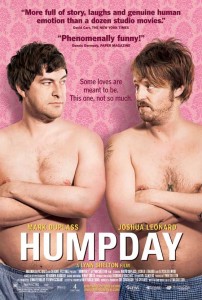
humpday_movie_posterKelly Reichardt’s Old Joy, Kevin Smith’s Zack and Miri…, what I imagine to be mumblecore because I’ve never seen any of this mumblecore, and the Apatow-ish ‘what now?’ limbo between college and mid-life crisis: Humpday embraces its influences, and sputters while it sets up its contrived conceit before coasting on awkward, yet real, emotions.  An old college friend shows up after a long hiatus to spend some time with his more stable, and married, bud (just like Reichardt’s set-up, basically).  But where Old Joy focuses on the impossibility of undoing the ‘growing-apart’ that people inevitably face when they spend time away from each other, Shelton pushes that aside and says ‘let’s make them fuck”.  After a rocky effort to set up this scenario (which I forgive because I usually suspend my disbelief for a film’s first third), the film becomes focused on some interesting facets of male sexual politics, stereotypes, and breaking down the idiotic institution that is marriage.

Ben, the married guy, is more open-minded than Andrew, the drifter, thinks he is; Andrew, inevitably, is more closed-minded than his hippie facade suggests.  The subject of the film is the pending fornication that Ben and Andrew will partake in, but the meat of it is how this effects Ben’s relationship with his wife, Anna, with which he is currently trying, and struggling, to get pregnant. The strength of the film, from this point, is in the tension created by the social politics that the film is attempting to question: How should Anna feel that her straight man wants to sleep with another man? Does it matter that Andrew is obnoxious and flaky? Is the knowledge that Ben and Andrew were friends before Anna was in the picture a factor in the insecurities?  If Ben and Anna were still in college, unmarried, would this dare be more acceptable to each of them? If so, why should marriage, a make-believe union that is used to mask insecurities of infidelity and the prevention of dying alone, change what they do, and how they interact, with other people? When Ben goes to that social gathering with Andrew, the night that the initial ‘deal’ was made, he sees a social setting that he hasn’t experienced in several years, a glimpse of what people his age are still capable of when free from invisible bonds of manners and ‘morality’.  Sleeping with Andrew isn’t so much about confronting sexuality as it is about proving that his marriage wasn’t the end of living life the way he wants to.

Anna, the reserved, borderline-bitch wife, eventually becomes the not-so-sheltered wife with her own history of marital excursions: she got drunk and made out with someone in a bathroom.  Ben’s reaction to this, obviously hurt and expressing the urge to guilt-trip her, is one of the film’s strongest moments, because it shows that he feels exactly the emotions that he is trying to get away from: the anti-experimental monogamy of a committed relationship.  Humpday argues that this seemingly cultural taboo of polygamy is either so hardwired in us that we cannot break it without some serious self-reconstruction, or that it is, worse, innate.  Though Anna theoretically cheated on Ben (at a time when he was, and intended to always be, faithful to her), it did not free her of anything.  She had her fun, but came running back to the safety of her picket-fenced union with Ben, more happy than ever.  The completion of this circle, then, relies on how Ben is affected by his own excursion (sleeping with Andrew).  This is where allowing Ben and Andrew to not have sex, a resistance to portray how Ben reacts to marital deviancy, fails so massively.  It closes off the male half of the debate, and makes the film’s entire argument incomplete (and, probably, pointless).  At the same time, it shows the film’s homophobia, which twice interrupted a scene of homosexuality because of heterosexual reservations; the first instance belonging to Andrew, the second belonging to the filmmaker.

Screener: Humpday (Shelton, 2009) Read More »
Memories of TIFF09, Pt. 4: Almost but not quite

Screen shot 2009-09-22 at 3.25.40 PMI Am Love (Guadagnino)

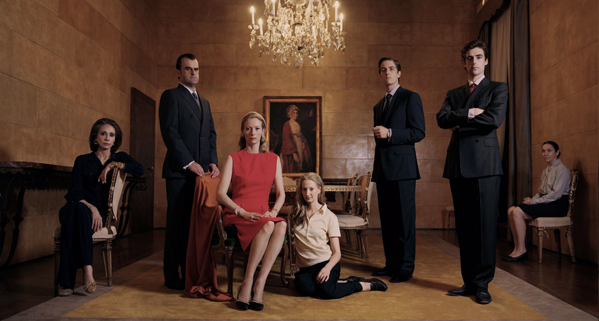
Films that just miss the mark can be excruciating to reflect on, and none of the films that I saw this year were as painfully close yet oh-so-far from a masterpiece as Luca Guadagnino’s beautifully monumental misfire, I Am Love.  The film looks at an aristocratic Italian family that is transitioning into a new era in pretty much every way: globalizing business, unconventional sexuality, and many others that reside in spoiler territory.  Holding it all on her shoulders is the elegant matriarch played expertly by Tilda Swinton, who is just as good here as she was in Julia.  She is caught in a struggle between the sense to conserve what her family is founded on, and the call to adapt to all of the natural changes and developments that are surfacing.  Much of the film’s strength, besides its technical bravura both in its lensing and its music, is in this pulsating tension and uncertainty that creates such an unbearable iciness in everyone.  Something is building, for sure, and it promises greatness.

Then, the development that the film was obviously structured around is revealed, and all of the steam that trapped under the lid simmers away, yielding what feels like a a poorly-made Adrian Lyne film.  Everything from the half-point on suffers from a big feeling of ‘ok whatever.’  It’s not that what is occurring is implausible, nor is it deviating from the film’s primary themes, but it’s just all so ordinary compared to the extra-ordinary set-up.  And it only gets worse from this point, introducing a last-minute, contrived downer-of-an-event that took my breath away only in its ability to shock me that this project could have sunk so low.  I convinced myself after the film that this bit at the end could potentially make sense, but again, it is done in such a cheap, thoughtless way that I wished I had stopped watching an hour earlier.  There is a final sequence that re-captures the swift energy that the film’s best moments master, leaving the family in a true disarray, as well as an eerie coda that plays in the middle of the closing credits, leaving a pleasant taste in my mouth that I decided to roll with.

Memories of TIFF09, Pt. 4: Almost but not quite Read More »

Memories of TIFF09, Pt. 3: thoughts on Trash Humpers

Screen shot 2009-09-21 at 3.34.08 PM
First of all, I hated the experience of watching Harmony Korine’s new film Trash Humpers.  I only caught the film because I swapped it at the last minute to replace Hong Sang-soo’s new film Like You Know It All, which I did for three reasons:

  1. Hong’s film is being released on English-subtitled within the next week in Japan, and
  2. It wouldn’t have ended until after midnight, which would have been both nearly impossible to sit through (considering that I woke up that day at 6am), and (considering that I would have to do the same the next morning) would have made it nearly impossible for me to get to bed on time. And
  3. All word coming out on Trash Humpers, both from published reviews and bystanders at the festival, was that it had very little chance of being distributed outside of the festival circuit.

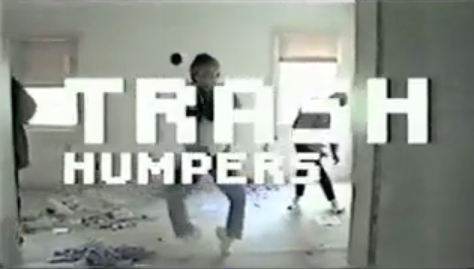
Trash Humpers is seemingly designed to be an unlikable film, and certainly unlovable, yet it has defied these characteristics to become both liked and loved by a significant number of established critics and cineastes, precisely because it accomplishes so well its aspirations of achieving ultimate detestability.  I agree with the opinion that the only useless art is mediocre art, a belief that holds up by how I am reacting to Trash Humpers, because the hatred I had built for it is inspiring thoughts which are consistently manifesting themselves in my consciousness to an extent that is only rivaled by those of the three or four films that I saw in the festival that I believed to be at least minor masterpieces.  But these lingering ruminations happen to not be about the content of Trash Humpers, but of the politics and manipulation that are necessary for one to consider this film to be of quality.  This is because the content of the film is Boring.

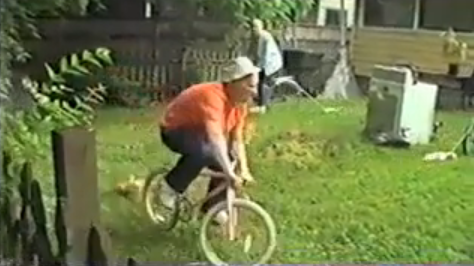
At 78 minutes, the content of Trash Humpers overstays its welcome by at least 68 minutes.  After the 10-minute mark it is only repeating what it has already done: trash-humping, appliance-destroying, life-hating.  These first 10 minutes could have potentially been a very interesting short film, in the same way that a strange and absorbing viral video on youtube can be considered to be a quality work if it was created intentionally.  There are several moments here where I chuckled at the absurdity of what I was seeing, both the absurdity of human beings behaving the way the ones on the screen are behaving, and the absurdity that I and 200 other film fans are actually watching this in one of the world’s most prestigious film festivals (not to mention, for this particular screening, in the Cinematheque located in the AGO, Toronto’s largest and most celebrated art institution).

However, once the film becomes repetitive, and, thus, quite boring, it is no longer the juvenilia of the film’s content, nor its sub-youtube quality VHS presentation, that makes the film of low quality.  I think that there actually could have been a version of this film that I would have supported and enjoyed quite a bit, because I didn’t mind the childish humor that much, nor the intentionally cruddy look.  But, for over 80% of a film to be boring is inexcusable, especially when the length is shorter that 80 minutes.  Boredom is the cardinal sin of a feature film, because once the viewers’ attentions drift beyond the content of the film or anything relating to it, there can’t be a completely informed discussion of its content.  Boredom is subjective, yes, but I can almost objectively say that a film in which its content does not develop or progress after the 10-minute mark to a level that is in any way different from what has come before it, will not produce enough interesting ideas to satisfy a 78-minute running time.  If it does for a particular viewer, then that viewer has a specialized attachment to the material, a bias to its humor, or perhaps the filmmaker, that ignores the quality: no version of the film could have disappointed them.

Screen shot 2009-09-21 at 3.33.45 PM

I checked twitter about half an hour after the film ended, searching for “Trash Humpers tiff09,” and of the 4 or 5 tweets that came up from people who just came out of my screening, none of them were anywhere near negative.  Sure, I’m aware that there is a very specific demographic that uses twitter, and even more so that tweets the moment a film ends or during the film; but, for those tweets claiming that the film was ‘hilarious’ or that it ‘rocked,’ I can only say that these people are lying.  I was in the cinema.  After the first 15 minutes, the people in that theatre, a fairly small theatre, was almost dead silent (save for the girl sitting behind me, who every twenty minutes let out a belly laugh when one of the humpers started humping another trash can).  No laughter, no giggles after 15 minutes, yet it was hilarious.  These tweeters and fans of the film, as mentioned in the review by Mike D’Angelo on notcoming.com, decided before the film that they were going to like it, and that they were going to laugh when a humper humped some trash, and are probably already planning private screenings of the DVD (or VHS) with a generous supply of marijuana to go around so that they can all giggle and guffaw at the awesomeness.

I was fully prepared for my reaction to Trash Humpers to be a negative one, and given a particular kind of distaste for it, I could have conceivably viewed it as a successfully terrible film.  But the manner in which it achieves its low quality is not acceptable, and its greatest accomplishment and discussion point, now, is that it has convinced anyone that it is worth discussing: a tired post-modern idea that has barely any interest anymore.  When the film ended, I was ready to never discuss this film again, to let it die as a blemish on my otherwise well-curated schedule; yet, here I am approaching 1000 words discussing it, falling brilliantly or idiotically into its trap.

Memories of TIFF09, Pt. 3: thoughts on Trash Humpers Read More »

Memories of TIFF, Pt. 2: some reviews

Dogtooth (Lanthimos)

An accomplished execution of an idea in a nearly exactly-executed package, there is little doubt that what is onscreen in Dogtooth is precisely what filmmaker Lanthimos wants to be up there.  Judging the film is not so much a matter of how well it does what it intends, but whether or not what it’s intending is too sadistic/hateful/absurd.  Knowing the concept going into the film, as I did, alleviates the confusion that is intended for the first 15 minutes of the film, created with (for non-Greek-speakers) nonsensical subtitling, robotic acting, and a cerebral tone that clashes with the warm outfitting of the environment and the ‘suburban’ family’s aura: these are the Beavers as programmed by a cynical computer.  The film works best when a character threatens to snap out of it, which often creates a hilarious tension in their behavior and the adapting reactions by those who are ‘informed’.  The concept may not be new – primarily having been done  across decades of literature – but this filmed incarnation is very much of this zeitgeist, and intermittently comes across as an essential and dire hypothesis for the outlook of a certain branch of society.

Independencia (Martin)

As Independencia trudges further into its brief running time, the film’s only noteworthy features – the look and the sound – become more obviously gimmicks.  While the audio, noteworthy for being triumphant and dynamic, is a welcome bit of superfluous style, the look of the film is not only distracting, but ugly.  It isn’t merely in the academy ratio and in black and white, but it is made to look like it is moving at 18 frames per second, resulting in a choppy and laggy aesthetic that is usually attributed to poorly compressed or exported video.  All of this would be more forgivable if the content of the film was engaging in its own right, but, save for a compelling, late thunderstorm, it isn’t.

Irene (Cavalier)

Unfamiliar with M. Cavalier’s filmography, I gained an interest in this film, like many of the ones that I saw at TIFF, from the word coming out of Cannes.  The idea for the film, consisting of Cavalier using his camera as a first-person looking glass at the remaining memories and diaries he has of his wife, Irene, who died some 25 years ago in an auto accident, was a concept that was enough to make me misty just reading it some months ago.  The film follows through on the promise of this synopsis, for sure (mist intact), but the meat of the film is in discovering exactly why this trek into Cavalier’s past and memories is so engaging for the unassociated viewer.  It becomes a study in what is, and isn’t, universal in a stranger’s life, and what is, or isn’t, disposable.  Moments unrelated to Cavalier’s scavenging arise, like a nasty fall down an escalator, in which we see Cavalier’s body, and even his face.  These few moments are startling because we’re reminded of whose life we are intruding; it is no longer confused with our own.  These moments simultaneously pull us out of the film, and further into its formal complexity.

Memories of TIFF, Pt. 2: some reviews Read More »

Memories of TIFF09, Pt. 1: preferences

Loved

  • Les Herbes folles (Resnais)
  • In Comparison (Farocki)
  • To Die Like a Man (Rodrigues)
  • Hadewijch (Dumont)

Very Good

  • Dogtooth (Lanthimos)
  • Les Derniers jours du monde (Larrieu)
  • The White Ribbon (Haneke)
  • Soul Kitchen (Akin)
  • Face (Tsai)
  • Irene (Cavalier)
  • Lourdes (Hausner)
  • White Material (Denis)
  • Let Each One Go Where He May (Russell)
  • I Am Love (Guadagnino)
  • Police, Adjective (Porumboiu)

Decent

  • I Killed My Mother (Dolan)
  • Crab Trap (Navia)
  • Independencia (Martin)
  • Le Pere de mes enfants (Hansen-Love)
  • Petropolis (Mettler)
  • Ajami (Shani & Copti)
  • The Happiest Girl in the World (Jude)
  • The Wind Journeys (Guerra)
  • Women Without Men (Neshat)

Problems

  • Carcasses (Cote)
  • Karaoke (Fui)
  • All Fall Down (Hoffman)
  • Spring Fever (Lou)
  • Vision (Von Trotta)
  • Lebanon (Maoz)

Bad

  • I Am Not Your Friend (Palfi)
  • Trash Humpers (Korine)
  • Moloch Tropical (Peck)

Memories of TIFF09, Pt. 1: preferences Read More »

TIFF 2009 – Day 1

The Happiest Girl in the World (Jude)

The downfall of this film is the use of repetition, which is neither structurally interesting nor narratively progressing; it seems to act only as a tactic of drawing out this well-acted morality tale from a long short to a feature length. The repetition involves take after take after take by a commercial filmmaking crew trying to get a good shot of Delia, the teenage protag, in which she is required to look happy in a TV ad because she won a contest that grants her a new car. The drama is that her parents want to sell the car to fund their own goals, which would supposedly indirectly provide a better life for Delia in the longterm. Both sides of the debate on whether or not this is fair to Delia are well-argued and thorough, but, like the monotonous takes for the commercial, are repeated too many times to sustain tension or interest. Worth watching for the engaging, typical Romanian realism, baffling me again with how so many different filmmakers can make films that feel so alike.

Face (Tsai)

Less a feature film than a succession of related shorts, many of the scenes, filmed exclusively with a static camera if I recall correctly, involve characters engaging in a Tsai-esque performance art act. Scenes of a woman taping up the windows and mirrors around her are compelling without doing more than providing palette of symbolism to be on hand for deciphering Tsai’s themes. Though I hate breaking films down into partitions, I always thought an interesting, though flawed, rubric for deciding on whether a film is ‘great’ was that if the film has at least 4 amazing scenes and no bad ones then it has done its job; Face is a case against this criterion, as it has at least 6 stellar scenes and moments, nothing that isn’t at least peculiar, and yet it doesn’t work completely as a whole. Much of it feels empty in a way that suggests that Tsai made the film because it was time to make a new film, rather than needing to make something and then making it (unless, of course, he needed to make a few great shorts and decided that they should be accompanied in a feature)

TIFF 2009 – Day 1 Read More »

My TIFF 2009 Schedule

September 10

  • L’Enfer de Henri-Georges Clouzot (Bromberg & Medrea) *

September 11

  • The Happiest Girl in the World (Jude)
  • Face (Tsai)
  • La Pivellina (Covi & Frimmel) *#
  • Wavelengths 1: Titans (Lutz, Emigholz, Marie, Gehr, Dabernig, & Snow)
  • Dogtooth (Lanthimos)

September 12

  • Vision (von Trotta)
  • Independencia (Martin)
  • Irene (Cavalier)
  • The White Ribbon (Haneke)
  • Wavelengths 3: Let Each One Go Where He May (Russell)

September 13

  • Father of My Children (Hansen-Løve)
  • All Fall Down (Hoffman)
  • Petropolis (Mettler)
  • Wavelengths 4: In Comparison (Farocki & Alonso)
  • Wavelengths 5: Une castastrophe (Gioti, Godard, Straub, Weerasethakul, & Gatten)
  • Police, Adjective (Porumboiu)

September 14

  • A Serious Man (Coens) ***
  • Trash Humpers (Korine) ***
  • Moloch Tropical (Peck)
  • Karaoke (Fui)
  • Wavelengths 6: Flash Camera Photo

September 15

  • Les Herbes folles (Resnais)
  • Soul Kitchen (Akin)
  • Lebanon (Maoz)
  • White Material (Denis)
  • Lourdes (Hausner)

September 16

  • The Wind Journeys (Guerra)

September 17

  • Ajami (Copti & Shani)
  • I Killed My Mother (Dolan)
  • Les Derniers jours du monde (Larrieu)
  • Carcasses (Cote)

September 18

  • I Am Love (Guadagnino)
  • To Die Like A Man (Rodrigues)
  • Eccentricities of a Blonde-Haired Girl (de Oliveira) **  I Am Not Your Friend (Pálfi)
  • Spring Fever (Lou)
  • Trash Humpers (Korine)

September 19

  • Women Without Men (Neshat)
  • Crab Trap (Navia)
  • Hadewijch (Dumont)
  • Enter the Void (Noe) (sold out)

* – a proseminar suddenly came up.

** – the de Oliveira showed up on the Cinematheque Ontario’s Fall season in their de Oliveira retro.

*** – T.A. class is on Monday mornings.

*# – meeting rescheduled for Friday afternoon instead of Thursday.

I think I’m most excited for either Sept. 12 or 13, while Sept. 14 definitely looks like an ‘off’ day.

My TIFF 2009 Schedule Read More »

Full TIFF 2009 lineup released; Tentative Top 40

The entire lineup for the 2009 Toronto International Film Festival was released to the public this morning, I’ve updated my spreadsheet here:

Based on this, and some slight deviations, here is a tentative Top 40 of what I’ll try to see:

  1. Independencia (Martin)
  2. (WV) Let Each One Go Where He May (Russell)
  3. (WV) Une Catastrophe (Weerasethakul, Straub, Godard, etc.)
  4. Like You Know It All (Hong)
  5. Women Without Men (Neshat)
  6. Eccentricities of a Blonde-haired Girl (de Oliveira)
  7. The Wind Journeys (Guerra)
  8. Irene (Cavalier)
  9. Hadewijch (Dumont)
  10. White Material (Denis)
  11. (WV) In Comparison (Farocki, Alonso)
  12. Dogtooth (Lanthimos)
  13. To Die Like A Man (Rodrigues)
  14. Enter the Void (Noe)
  15. (WV) Titans (Snow, Dabernig, Lutz, etc.)
  16. Huacho (Alemendra)
  17. Petropolis (Mettler)
  18. The Father of My Children (Hansen-Løve)
  19. Face (Tsai)
  20. Mother (Bong)
  21. Spring Fever (Lou)
  22. Happy End (Larrieu)
  23. La Pivellina (Covi & Frimmel)
  24. Lourdes (Hausner)
  25. Between Two Worlds (Jayasundara)
  26. Soul Kitchen (Akin)
  27. Life During Wartime (Solondz)
  28. My Son, My Son, What Have Ye Done (Herzog)
  29. Les Herbes Folles (Resnais)
  30. Police, Adjective (Porumboiu)
  31. The White Ribbon (Haneke)
  32. Scheherazade Tell Me a Story (Nasrallah) Vision (von Trotta)
  33. Moloch Tropical (Peck)
  34. Karaoke (Fui)
  35. I, Don Giovanni (Saura)
  36. Trash Humpers (Korine)
  37. I Am Not Your Friend (Pálfi)
  38. Hotel Atlantico (Amaral) Carcasses (Côté)
  39. Ajami (Copti & Shani)
  40. L’ Enfer de Henri-Georges Clouzot (Bromberg & Medrea)

If I’m overlooking anything significant, please let me know.

Take care.

Full TIFF 2009 lineup released; Tentative Top 40 Read More »