Author name: Blake Williams

Brief hiatus

Being out of Toronto until the end of August has prompted me to take a bit of a break before TIFF takes over my life. It’ll also allow me to watch some stuff that is above my capacity for any sort of thoughtful reflection without the pressure to write capsules for them (like Hellboy, apparently). I’ll still update the TIFF colour thing on Tuesday when the full lineup comes out, and I’ll post a top 50 of what I’m most likely to check out a few days later. And, if I see anything, it’ll go in the Film Log, as usual. Cheers!

Brief hiatus Read More »

Mid-August lunches


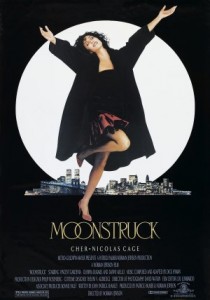
Moonstruck (1987, Norman Jewison) – 6.1
 
A bit shaky, but gets the job done better than most straight rom-coms do. No single character is particularly likeable or worthy of much sympathy, but the cumulative force of this high-strung family coalesces and brought a lump to my throat. As Shanley himself put it, it makes the idea of ‘justice’ out to be the most damning thing to ever happen to the idea of ‘family’. If these people tried even a little to judge each other based on what they all actually deserved, there would be no hope or love left for any of them. If that all sounds a bit too Sister Sledge for its own good, it’s because it is.
 
 
The Myth of the American Sleepover (2010, David Robert Mitchell) – 5.8
 
Just checking to see when this film is supposed to take place, and all (lack of) information suggests that it’s set in the present. I get that it’s probably aiming for a timeless quality or nostalgia, but the absence of cell phones and internet in the lives of these couple dozen upper-middle class teenagers is distractingly anachronistic, missing an opportunity to really take a glance at how adolescent social spheres are shaped in 2010. Mixing signals about the setting even further was the ambiguously non-diegetic incorporation of Beirut’s ‘Elephant Gun’ during a leisurely bike ride, which suggested a relation to modern day twee-ness. This isn’t to say that I need historically accurate coordination between soundtracks, settings, and subjects (House of Tolerance confuses these traits to euphoric effect). What it seems to be doing, strictly, is reminiscing about a particular childhood activity that doesn’t carry over into adulthood, for whatever reason, and evoking the hazy identity crises that correspond to that period in life. What this results in is a well-observed yet light-as-a-feather depiction of kids’ fickle feelings and ill-advised decisions. Would this have greatly benefited from representations of some non-suburbanite, middle-to-upper-middle class characters? Probably (I really have to try to forget how enraged I would be if I were a lower-class teen watching this film). And we’re possibly still at the stage where an appearance from twitter, facebook, texting, etc. would be too swaying toward that ‘topic’, but a coming-of-age film that is about such a generic activity is deprived of a much-needed edge (and the dubious morality of Scott’s crush on the Abbey twins is not the kind of edge I’m talking about).
 
 
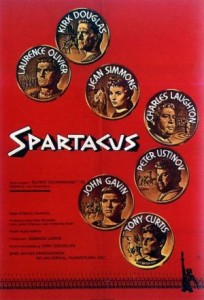
Spartacus (1960, Stanley Kubrick) – 6.6
 
Well, I guess I can like a film with a gigantic clash of huge armies a bit more than Lawrence of Arabia, after all. I still think – as I did with Lawrence – that the big battle is overwrought and noisy filler that makes the post-intermission stretch significantly less affecting than the masterful set-up, but the writing is so sharp and the scope so rhapsodic for the entire duration that it ends up wowing more often than not. The second half is also laced with scenes of poignance that border on excess schmaltz – the ‘I’m Spartacus’ bit; the reunion with Varinia; the final scene – that are rousing but with a heavy-handed precision that is slightly aggravating, where the earlier moments (there are many in the gladiator training stages, a majority contained within a single Kirk Douglas gaze) achieve a greater weight because of their modesty.


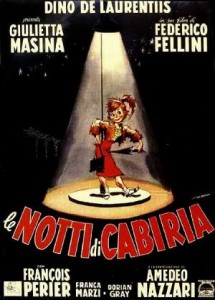
Nights of Cabiria (1957, Federico Fellini) – Inc.
 
I walked into the theatre anywhere from 5-10 minutes after the movie started (the TIFF Bell Lightbox usually starts evening screenings at 6:30, but today they scheduled it for 6:15; I will have to look at every ticket from now on), so I had no idea if/how what I’d missed would impact my reading of the 95% of the movie I was watching (having just seen those first 5-10 minutes online, I’m aware that my experience would have been significantly different, especially how I responded to the ending). It’s not even worth trying to say anything else.
 
 
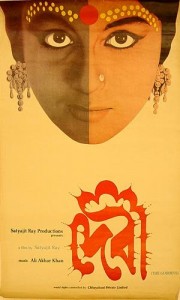
The Goddess (1960, Satyajit Ray) – 7.8
 
Affecting in a myriad of ways – the male sense of displacement when a woman leapfrogs (literally) overnight into a position of superiority; a marriage crisis drama, in which one partner becomes aware that he/she can do more with his/her life, but only without the other partner; most directly, a caustic portrait of withering psyches after they’ve become obsessively idolatrous. It’s a perfect balance, then, of personal, political, and religious turmoils without overselling any one theme. That it accomplishes this in lusciously framed compositions in shimmering black & white photography (this was one of the few instances where the idiom ‘the silver screen’ was entirely justified) is just spoiling us.
 
 
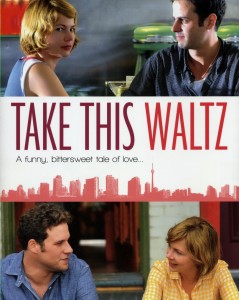
Take This Waltz (2011, Sarah Polley) – 4.8


Mid-August lunches Read More »

Spaghetti and meatheads


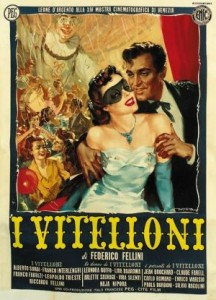
I Vitelloni (1953, Federico Fellini) – 3.5
 
Moved into the ‘re-visit’ pile for, let’s say, 10 years from now, because clearly I’m missing something at the moment that allows everyone else to connect with these characters. I tried to see if it was just a fluke mood I was in by watching some clips a couple of days later on youtube to see if they’d play any better for me, but no dice. It’s likely an aversion to Fellini’s tell-don’t-suggest style, which is evident, even at this early Neorealist stage in his career, from the opening montage introducing the characters. The narrator details, “Another day has come to an end. Nothing to do but go home, as usual” (italics mine), followed a couple of minute later by, “Just like every other night, only Moraldo walks the empty streets.” Perhaps this should be forgivable given that it’s just an opening, stage-setting bit of background info, but in this case, the ‘as usual’ and ‘just like every other night’ seem to be what the rest of the film actually details. For a film about the numbing mental and physical stasis of post-adolescent manhood, would it not be more poignant, compelling, engaging, etc. to actually learn of their lives’ monotony by experiencing it with them? As promised, these men have nothing to do to but lounge around, sleep with women who aren’t their wives, and partake in mildly amusing yet fleeting shenanigans, only to climax in a fairly beautiful escape for Moraldo, whose panning visions of his friends sleeping as he takes off for Rome effectively whisked me off into the relatively elating task of biking home. This is all more or less what happens in Diner (below), which is delightful; having watched Levinson’s film immediately after I Vitelloni just makes me suspect that Fellini’s portrait of bumbling hill-peakers is playing at a frequency that I am deaf to.
 
 
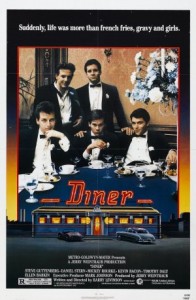
Diner (1982, Barry Levinson) – 6.9
 
I was surprised to learn that this was not my first Levinson experience (that would be Sphere, which I loved and lobbied for endlessly in middle school), and, more so, that this was nearly optioned into a TV series with Michael Madsen as Boogie (there was a 30-minute pilot, but it doesn’t look like it really got off the ground). Interesting, though, that the TV show was supposed to focus more on the wives, because the women in Levinson’s feature are the standout, with an extra special mention for Ellen Barkin, whose turn in the record cataloging fight would be enough to win me over for forever if her part in Shit Year hadn’t already done so. A film that will almost certainly shoot up with successive visits, it captured perfectly the crippling and often insanity-inducing incompatibilities that must be coped with for a relationship to work.
 
 
Rome, Open City (1945, Roberto Rossellini) – 7.6
 
Kind of the same idea, toward the end, as I Confess, but with grueling stakes that go beyond vanilla movie violence as the consequence. The first half sets up sympathetic characters with affectionate aspirations in life, and the brutal brevity with which these lives are obliterated is upsetting on a visceral level. A shocking act of violence removes a central character to the webbed narrative with whose life we’ve very much become complicit, closes the curtain on the first half, and does not relent as the second half ultimately verges on torture porn. The style is a well-seasoned balance of neorealism and Hollywood studio flair – the hopefulness of Hollywood crushed by the Italian tinges of wartime fatalism. Also, it ends up as a pretty damning portrayal of the consequences of catholic rituals, pretty much opposing Hitchcock’s heroizing of his faithful priest head-on.
 
 
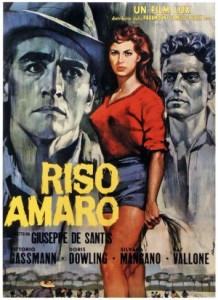
Bitter Rice (1949, Giuseppe De Santis) – 6.8
 
Captures a place, era, and struggle with supreme detail despite it’s classical flourishes (say what the programmers will, this film does not belong in an Italian Neorealism retrospective unless it is meant as an example of contemporary filmmaking going against the movement. Sure, it’s shot on location, but these are budding and seasoned actors in highly dramatic, noir-ish scenarios, lensed by intricately – not to mention elegantly – choreographed shots and set-ups. Even the pessimistic finale ended up feeling like a crowd-pleaser). The piles of rice become like sand dunes, locating the mythical-looking jewelled choker in a mise-en-scene fit for something more like some kind of ancient amulet. And it seems to have some sort of voodoo power anyway on these women, sending those who crave it (with ‘it’ being the choker, but also, basically, wealth & sex) into howling, writhing hysterics. Glides along toward its finale, which isn’t quite tragic, but nonetheless inevitable as if legend, with flair and nary a wasted moment. Had a strong sudden impact, but the airbags are deflating, and I presume this will not play well on another look (grumbles about an upcoming Criterion edition would facilitate that, however). Enthralling tracking shots of the possessed women were startling, terrifying, unsettling, but perhaps it was merely effective because, in the midst of a Neorealist retro, my expectations were for something far more subdued.
 

Spaghetti and meatheads Read More »

“Come August, we like to celebrate…”

Umberto D. (1952, Vittorio De Sica) – 7.0

So Wendy and Lucy really was Reichardt’s stab at Italian Neorealism. It’s not the dogs’ ‘dogness’ that makes these films’ finales so heartbreaking, obviously, but their inabilities to comprehend the reasons for their future heartbreak (yes, I believe these dogs will be heartbroken when they realize they’ve been bastardized), which first hits Umberto, as he is dismissed by society, thus spreading to the dog’s fate. The landlady is too villainous, and the young girl too self-serving, but kudos for not making Umberto himself very sympathetic. After he throws poor Flike onto his landlady as revenge for letting him loose, he becomes just as laughably misbehaved and irrational as the other wretches patrolling Rome circa 1952.

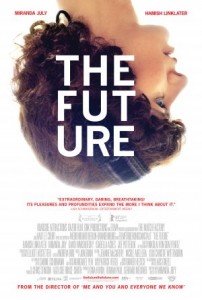
The Future (2011, Miranda July) – 7.6

[Spoilers throughout] Goddamn the haters for making me feel guilty for pretty much loving Miranda July. Treating life as if every gesture were a performance art act, she transcends the tweeness by accumulating solid, simple ideas that resonate on a purely human level, and then obliterating the airy worlds of her protagonists with a hit of real-world consequences. Sure there’s the cat (which is not a narrator, by the way; he tells no story but his own), and she plays the same Beach House song about two dozen times (a great song, at least). The worst that any of the first half of this film could be charged is for being ‘too cute’ – perhaps the same as quirky, maybe even hipster, and almost certainly twee. But it’s building up these layers to present a lifestyle that is incapable of really dealing with the real world – genuine drama and pain and suffering: the things that real quirkfests love to forget about. There’s a cat that speaks (or probably just thinks) in English, what’s the worst that could happen? These guys are so damn cute for each other, they’re adopting a wounded cat and cancelling their internet service. Too cute. Things derail, though, when one of Sophie’s (July) gestures (she calls a guy that drew a kitschy portrait of his daughter, and tries to determine where they are in relation to each other by looking at the clouds) gets away from her and starts to become part of a different kind of lifestyle…a different kind of movie. When Marshall and Sophie first speak to each other on the telephone, and much more so when they meet in person at Marshall’s home, there is enough sexual tension to suggest where this is going, but I consciously thought to myself something like ‘if this were another movie, these people would totally start an affair or something’. And then they do. And then Jason’s magic powers to stop time become ‘real’, and the moon starts speaking, trying desperately to change the film back into what it was supposed to be, and yet Sophie’s time moves on in a kind of parallel world straight out of a Lynch film, only it’s disarmingly Normal. Like a movie playing in another room, this thread progresses at an accelerating speed that moves forward as if on a mission to get it all in before the 90 minutes are up, defiantly situating itself to end in the exact way that this film, as it began, had no chance of ending. It’s one of those films that I can only really defend by jiving with it and then acting stupefied at those who couldn’t likewise jive, but this is just a magical movie, through and through.

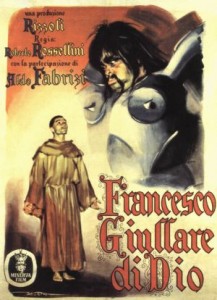
The Flowers of St. Francis (1950, Roberto Rossellini) – 5.1

Fine enough, but what the hell is going on with the acting? I know they’re real monks (now), but Francis’ expressions of grief are downright presentational in their stilts and hamminess. It works though, in its own way, because these men are supposed to be actively naive, forgiving, and all-loving, and their performances lent a childlike purity that made their actions even sweeter, almost precious, even.

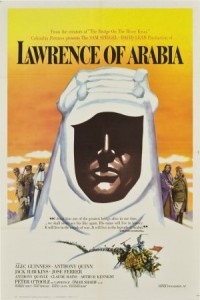
Lawrence of Arabia (1962, David Lean) – 6.3

As engaging as a huge, blockbuster epic with a climax of two gigantic armies stampeding toward each other is going to get for me. Most affecting moment is easily Lawrence’s confession that he enjoyed his execution of Gasim, which was great but unfortunately seceded by two hours more of film that essentially makes that trait clearer and more extreme. What happens when an egotistical and ambitious man who has been put in charge of a large army also finds himself to be highly sadistic? He gets the job done, that’s what. Glad I finally saw it, but it’s a bit too tidy, even at four hours, to motivate a revisitation in the future (my problem with most of the canon, hence my avoidance).
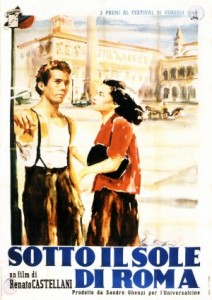
Under the Sun of Rome (1948, Renato Castellani) – 6.5

Who? What? Huh? Why I’d never heard of this film or filmmaker before now boggles the mind. This is a major entry in Italian Neorealism, with photography heavily influenced by French Poetic realists, and some of the most superb non-professional acting I’ve yet encountered. Little touches, like the shots during the boxing match when the fighter is punching Ciro as shown through the perspective of a jug of water, just elevate it even more above the films typical of the era. Features some of the starkest tonal shifts pre-dating Cassavetes, usually between people (Ciro’s make-up then breakup with Iris), but also extending to the mise-en-scene as it abruptly puts on the breaks of adolescent summertime patrolling to harsh war-time panic. All of the key characters seem to love and hate each other, always. I’m not yet prepared to address the blatant homoeroticism going on between Ciro and Geppa, but it’s totally there in the ‘Primo tempo’.

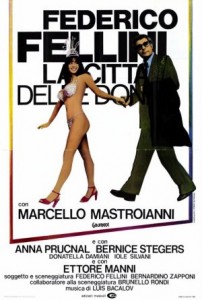
City of Women (1980, Federico Fellini) – 5.0

As pointed out by my new friend Scott, this is essentially an amalgam of 8.5 and Casanova, for better and worse. For all of the attention drawn to Fellini’s fascination with Jung, he sure shows a low capacity for subtext. Angry feminists, copious phalli, a rooster mounting a cat (get it?), and a final shot of a train rushing into a tunnel (DO YOU GET IT???), he tries to reconcile how juvenile archetypes shaped, tortured, and nurtured his sexuality; it is at once too universal and obnoxiously self-absorbed. The film is essentially a trip through Fellini’s Phallic stage (to mix psychoanalysts’ metaphors) which potentially never reached latency, explored as a dissection of his dream-state psyche. While many of my favorite films could be described that way, it is really only valuable when coming from those whose psyches house more complex desires and thoughts that Fellini’s apparently does.

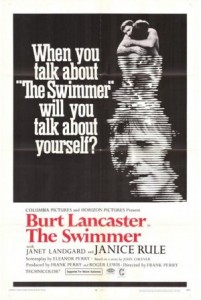
The Swimmer (1968, Frank Perry) – 6.6

Love the idea, but the execution is hit-and miss (the ‘hits’, though, are doozies). I had to look up Nathaniel Dorsky’s wikipedia page to make sure that he didn’t start making films after this – his first shorts, which I’ve recently seen in Chris Kennedy’s Early Monthly Segments at the Gladstone Art Bar (end plug), were made just a few years earlier, though Dorsky wasn’t yet making the type of work that I thought was evoked here – because there are several impressionist passages that are tied directly to Dorsky’s signature poetic style (at least, to his Compline, Aubade, and Pastourelle that played in the TIFF 2010’s Wavelengths sidebar). This isn’t even touching on the other big art extract, Hockney’s pool paintings, which he began making in ’67, just a year before this film’s release (these are probably coincidences, or maybe these guys had more connections to each other than I am able to source out). Anyway. Lancaster’s physique is really the star here; at first well-sculpted and youthful when first glimpsed emerging from the woods toward his first pool, gradually exposing scars, wrinkles, crevices, and flab that show a weathered and worn man past his prime, struggling – like all of the bourgeois elite he encounters – to retain the significance and ideals of their past. I couldn’t decide if Perry was embracing an intentionally hammy vibe striving to make this into a readymade cult picture, or if that was all just inherent in the film’s ideas and its casting of Lancaster. Either way, it downplays the weight of Ned’s deterioration – the exact opposite of an ‘awakening’ that the film’s premise hints at – and makes many moments that should be heart-wrenching into giggle-worthy cringe-inducers.

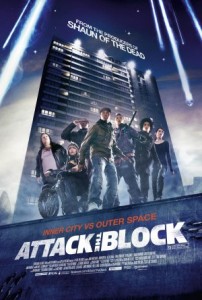
Attack the Block (2011, Joe Cornish) – 5.4

British humour has always been a bit lost on me, a fact I finally accepted when I laughed exactly four times at In the Loop. It’s a combination of my difficulty with hearing the words they’re saying, and that I know next to nothing about the cultural quirks that are the subject of so many of the jokes. Or does it all hinge on the fact that they talk funny. This is not to say that Attack the Block is a comedy that I did not appreciate because I didn’t think it was funny, but that I couldn’t imagine this generating the kind of buzz it has without its supporters thinking it was a laugh-a-minute riot, because as an alien invasion film, it’s solid, but certainly not fresh. The aliens are minimal and actually look pretty cool with their emerald-glowing teeth and opaque fur. I could also discern its socio-political value (though, again, not something I’m exactly familiar with), which gives it points for ‘saying something’. But really, it’s a predictable, structurally by-numbers film with only sketchily drawn characters and a groovy soundtrack. Cornish avoids all opportunities to let his film become necessarily unhinged, and his determination to end the film on that smile is too schematically set-up.

“Come August, we like to celebrate…” Read More »

End of July


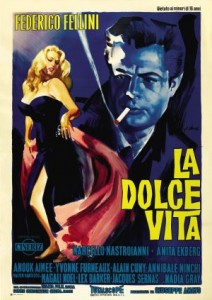
La Dolce Vita [1960, Federico Fellini] (7.5)

Fellini peaked early. None of the other nearly-dozen features I’ve seen have been quite as affecting. Assembling its episodes from tabloid headlines and rampant paparazzi culture from his youth, one gets the impression that he packed all of the best ingredients into one entrée, many of them (the flying Jesus and giant sea monster bookends, in particular) the most fantastical and colorful details of any of his films I’ve seen. Detailing the lifestyle of a man whose desire for glamour and hedonism conflicts with the impulse to settle down that is embedded in his (and his fiancée’s) DNA, it spells the conflicted hollowness and euphoria inherent in the life of the rich and famous, which ultimately leads them, as well as those who yearn for such a lifestyle, into insatiable unhappiness.
 
 
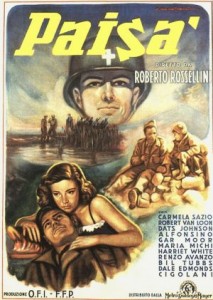
Paisan [1946, Roberto Rossellini] (5.7)

It was tempting to mark this as ‘Inc.’ because the print was so chopped up and many subtitles were missing, but in the end I think I got enough of it to know that it is just a set of shorts films in which some work much better than others. The portrayal of the Americans was unexpectedly multi-faceted, refusing to play them as excessively villainous or mindless (though the thick Southern accents didn’t help with that). Not sure if the fact that the Americans couldn’t remember what certain Italian characters looked like the day after spending isolated bonding time together was weak storytelling or a sly neurological racism worked into their character traits.
 
 
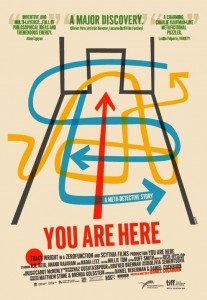
You Are Here [2010, Daniel Cockburn] (7.2; down from 7.7)

Handles many ideas that I’m currently grappling with, with enough DIY aesthetics, games and tests, and Wavelength references to leave me smirking the whole way through. The anecdotal structure is successful purely because the anecdotes are so provocative, and while they all deal with greater ideas of consciousness and self credited to John Searle, Cockburn positions them, returns to them so that it also becomes a dissection of the perceptive and cognitive components of movie-watching (most explicit in the film’s most chilling scene about an inventor who develops an computer eye for blind people, and then switched the programming so that everyone with the eye can only see what he sees). It is perhaps too precocious for its own good, not to mention that the compelling pedagogy of some of its sequences can cross a line into pedantically schooling the viewer, but it is undeniably inventive in its own resistance of conventional cinema logic or form, and holds itself together surprisingly well.


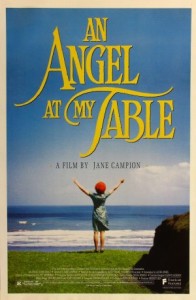
An Angel at My Table [1990, Jane Campion] (6.9)

I’m not quite sure why I respond so well to Campion’s deceptively conventional brand of (auto)biographical nostalgia, nor her episodic structures, which would normally leave me snoozing through their rambling, shapeless, sepia-toned running times (see: Terence Davies). There is an edge to her direction, with slightly off-timed line deliveries and lingering angles positioned at awkward heights, that makes it just, for lack of a better word, amateur enough to leave me hooked. She has a brand of quirk that isn’t manufactured, doesn’t care if it finds an audience, like she just needs an outlet and this is it. I thought this was Campion’s autobiopic until I learned it was Janet Frames (Janet as a pseudonym for Jane, poetry instead of filmmaking…not too crazy), which is as much in debt to the vibrancy and detail of Campion’s assemblage as it is to the similarity of her name to her subject’s.
 
 
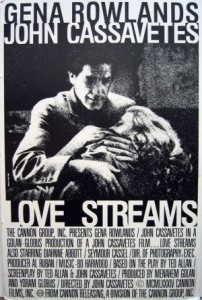
Love Streams [1984, John Cassavetes] (6.4)

The one film by Cassavetes where the overwhelming positive is the filmmaking (i.e., photography, montage, lighting) rather than his usual excellence in script and direction. Viewed as the last ‘true’ film before he bastardized Big Trouble and then died an early death, it almost reads as a frankensteined greatest hits of scenes and characters from his earlier films: Sarah is clearly a resurrection of Mabel, while her relationship with Jack could be how Minnie and Seymour Moskowitz turned out after a decade or so of romance. Also, pretty sure Robert’s house was the same as the one used in Faces? Anyway, key characters are trying to convey love – a term that Cassavetes breaks his back over in an effort to abstract it further than it’s ever been – and have yet to negotiate for themselves the difference between tenderness and silliness, suggesting that while there really may not be a clearly-defined distinction between the two, it is downright toxic to display both forms simultaneously; in equal measure, they cancel each other out. The last reel of this film is a masterpiece, and a devastating final page in his oeuvre. It’s too bad that the rest of the film, while enthralling in spurts, suffers from some severe tonal imbalances, as well as some of the most self-consciously ‘heavy’ performances I’ve ever seen.
 
 
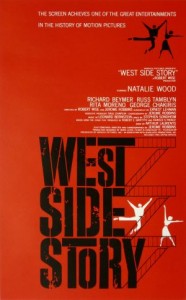
West Side Story [1961, Jerome Robbins & Robert Wise] (4.8)

Romeo and Juliet-ish take on mid-century race issues in NYC is about as gentrified as Giuliani’s Times Square. I hate that the Puerto Ricans are mostly white people in ‘brown face’, speaking in a faux-Latin accent that would get any white person’s ass justifiably kicked were it actually spoken in New York; I hate that after every musical number all of the characters pause, and then burst into cheers and high-fives to congratulate each other on the awesome choreography they just pulled off ‘spontaneously’ (I know this is kind of a signature of Broadway, but still); and I hate those god-awful songs that are not even the least bit catchy (except for maybe I Feel Pretty, and why God why do I have to have that song stuck in my head?). Loved the prolonged overture and opening with just ambient sound effects, and those sets sure are colorful. The one audacious stroke in the whole project was allowing the film to end without any of these hollow, irrational people getting to change. It ends when things are most dire and depressed, but, unlike the infinitely more incendiary Do the Right Thing (which does more or less the same thing), it feels entirely manipulative and unearned.

End of July Read More »

4 More Quickies from July 23-26


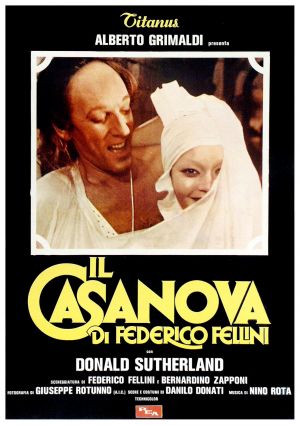
Fellini’s Casanova [1976, Federico Fellini] (5.0)

An occasional visual stunner that mostly permeates in my memory as an interminably obnoxious act of sadism toward the audience. Not in the torture porn sense of sadism, but in the kind such as approximating a fascinating film but with enough of an err toward crap that it causes a unique sort of spasm in the cerebral cortex. Casting Donald Sutherland was a true masterstroke, as he embodies everything that is right and wrong with this film in just one of his sweaty pelvic trusts.
 
 
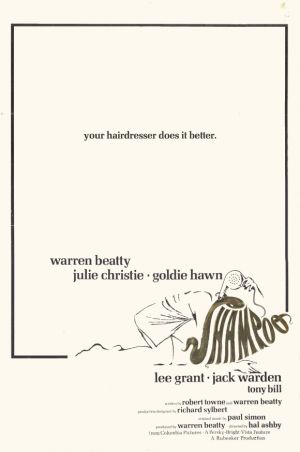
Shampoo [1975, Hal Ashby] (7.3)

Will need to re-watch, but about an hour in I realized that I was in a bit of a subtle trance state, just watching these people do not much other than each other. Then came the euphoria of the election night parties, and that strobe light, and it was the most banal kind of bliss I’ve experienced in some time. The ending is affecting, but felt a tad too calculated.
 
 
Minnie and Moskowitz [1971, John Cassavetes] (6.3)

Cassavetes’ way of allowing scenes to ramble looooong past what any studio director would be allowed, or allow himself, is married to a funky kind of ellipsis in the first half that nearly left my mouth agape. I spent the first half hour trying to detect whether the projectionist had mixed reels (and I’m still not convinced that they weren’t out of order; the opening credits get cut short and then resume about 15 minutes later – anyone? intentional?) and finally succumbed to the ride. These people are insane, under the influence if you will, and I had so much pleasure watching their tirades linger on the screen before getting cut off, sometimes mid-sentence, only to return an hour later (maybe), that I didn’t really notice that they’re actually pretty thinly sketched. The second half gets considerably more straight forward as we focus on Minnie and Moskowitz – I guess this was to be expected – and I realized that I was probably supposed to care for these people a lot more than I actually did.
 
 
From Here to Eternity [1953, Fred Zinnemann] (6.1)

Perhaps it didn’t know what to do with itself tonally, but I thought that was one of the more compelling things about it. Why was a romance triangle built with Deborah Kerr if she is going to almost completely disappear in the film’s second half? Why shift from an endearing and selfless act of revenge in an alley into a full scale Pearl Harbor war picture? Who cares? It made the hammy elements of each detour at least formally tolerable.

4 More Quickies from July 23-26 Read More »

4 Quickies from July 19-22


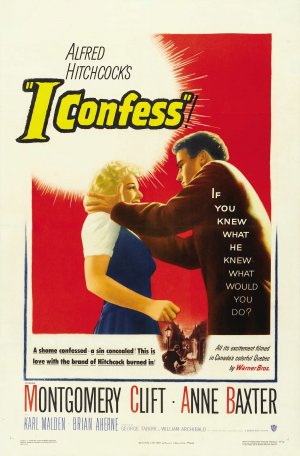
I Confess [1953, Alfred Hitchcock] (6.2)

Would fit nicely into an essay on Hitchcock’s fluidity of guilt, not to mention his Catholic upbringing – this being the most overt confrontation with it.  It’s almost certainly his most literally spiritual film, but it slides toward the back of the pack in terms of visceral spirituality.  Predictable and questionably directed, it nonetheless presents a compelling moral dilemma that gets surprisingly tense in its latter stages.  I was hoping for the ‘The End’ to appear as Father Logan exited the courthouse after hearing his verdict, but was instead provided a citation for Kinski’s Aguirre performance.


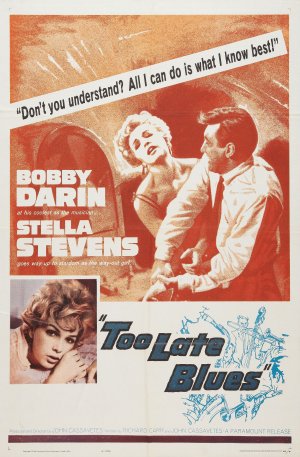
Too Late Blues [1961, John Cassavetes] (6.0)

A film about spontaneity as much as it is about pride, chauvinism, and selling out, which is perhaps obvious in reference to a Cassavetes film, but I think this is both the first film of his to really incorporate it as an essential element (at least, I didn’t think Shadows was really concerned with it), as well as the most ambivalent toward it. Every key moment for protagonist John ‘Ghost’ Wakefield happens at a moment that seems to spring from nowhere, signalling actions that go against his believed-established morals and ideals – his treatment of Jess during the bar brawl carrying the most consequences.  His commitment to jazz and making more populist career moves is the conflict that ultimately wipes him out, prompting the loss of his girl, his friends, and his music. Much better for me in retrospect, so I’ll probably like it much more next time.


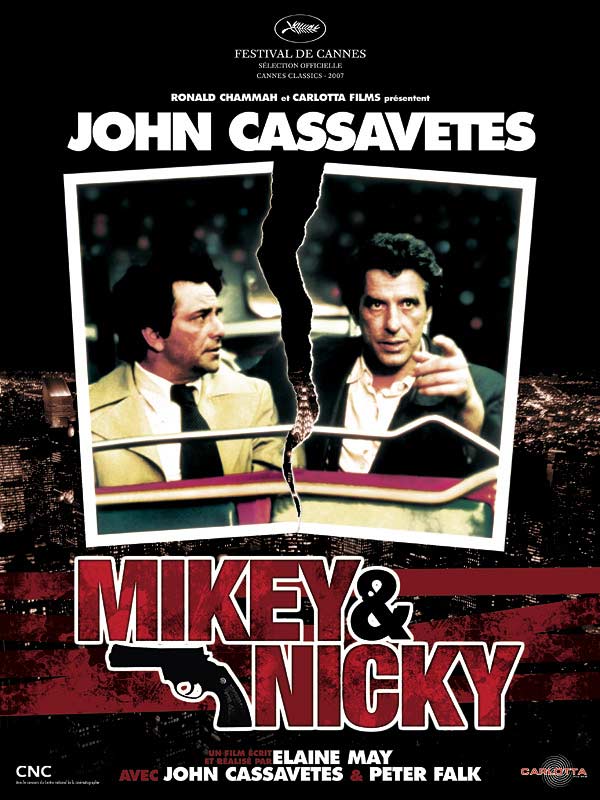
Mikey and Nicky [1976, Elaine May] (5.9)

The shot-reverse-shot patterns really irritated me, and I couldn’t shake the feeling that I was watching a hack doing her best Cassavetes impression, going so far as to cover it up by casting the man himself for the lead.  I don’t like to put too much stock in gendered voices, but this film was trying really hard to not come off as feminine.  The climax is brutal and unforgettable, but the evolution up to that moment – an intimate relationship between two males – needed someone who’d lived such experiences to tell them with any amount of breadth.


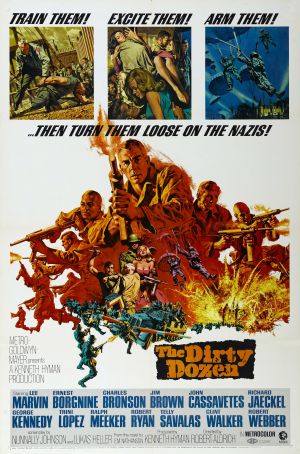
The Dirty Dozen [1967, Robert Aldrich] (3.9)

I was afraid that a film about twelve prisoners deployed on a confidential and urgent mission would play out like this.  Aside from the absurdity of the premise, you’ve got your token nutcase, screwball, and wise one, plus some fillers since it’s too difficult to make that many memorable characters without trying too hard. Ends in a loud, vulgar finale that holds up worse now than it probably did a few years ago now that Inglourious Basterds showed essentially the same thing, but with more grandeur, catharsis, and fun.

4 Quickies from July 19-22 Read More »

Two Films on July 17, 2011

 
Pyaasa [1957, Guru Dutt] (Inc.)

‘Inc.’ because the promised screening format was 35mm, and what they were actually showing was a digital projection of what looked like a VHS bootleg (now that I look up screen captures to see how close in quality what they screened is to internet versions – and the quality is quite comparable – I’m also noticing that their aspect ratio (it was shown at 4:3) may have been off (the online version looks something like 1.66:1)). The bad quality isn’t the problem itself, but more that I was too enraged for the first half of the film to focus on anything else. I hate to carp on technical displays for a film of this stature (though, the only time I’ve ever written anything about perhaps my favorite film ever, Play Time, was to complain about how the Harvard Film Archive projected it from the Criterion DVD instead of a film print), it really prevented me from connecting with the film. This is based on expectations, of course, as I’m pretty sure that if I’d sat down in my living room to watch the same crappy version, I wouldn’t have been fuming, and therefore probably would have been fine as usual. What I did get, though, is that this film has beautiful music (looking for the soundtrack now), and it is beautifully photographed (from what I could gather), and that I’m not sure if Vijay’s transformation into a didactic Christ-figure, turning the end of the film into a sermon, will ever sit well with me. Here’s to a better screening scenario next time.


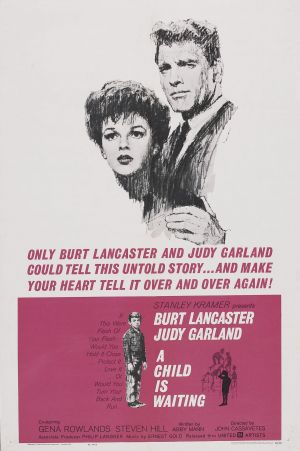
A Child is Waiting [1963, John Cassavetes] (5.5)

Similar to David Lynch with The Elephant Man, Cassavetes briefly went Hollywood early in his career for a very ‘un-him’ tearjerker, both coincidentally centered around life-crippling disabilities. This would really make a good companion to The Miracle Worker, as they are both about a woman’s struggles to discipline a disabled child, only in the Penn film the disability is physical, where for Cassavetes’ it is mental. The cognition required to properly integrate into society, and to abide its rules, is inherent in our DNA, and I was anticipating how the script would approach the little hiccup that lead to all of the subjects in this case being ill-equipped for such integration. The resolution, apparently, is to get frustrated and give up, which is significantly less compelling than watching Annie Sullivan whip Helen Keller around a room for reels at a time. Cassavetes’ talent for actors comes through in the Thanksgiving ‘play’, as the Down Syndrome-afflicted kids give believably stilted line deliveries that had prior-to-then been naturalistic, which I’d assumed was a given since they probably weren’t completely aware that they were even acting. Plenty of lush B&W photography to glaze over the excessively cloying bits (i.e. most of it), but I’m pretty sure that this was really just a vehicle to build to a gratuitous scene of Judy Garland tearfully singing ‘See the Snow Fly’ at a piano to/with a chorus of out-of-tune children.

Two Films on July 17, 2011 Read More »

Winnie the Pooh [2011, Stephen J. Anderson & Don Hall] (5.1)


Pretty slack, unfortunately. Excluding the longest end credits in recent memory, this barely cracks the 50-minute mark, and it’s essentially just your everyday Winnie the Pooh story drawn out to (barely) feature length. The post modern text play is fun, but bogs further into the educational moralizing typical of the Pooh franchise, tacking on an elementary lesson in semantics. I’m all for kids getting served some life lessons with their entertainment, but I felt too old for this material. Also, since I did grow up on the short episodes (my dad would either wake me up at 7am to watch them, or set the VCR to record them for me), I found the variances in the voices, however slight, and despite not having seen any Pooh material in two decades, more than unsettling – Eeyore especially. Not to mention that I never really understood until now that Winnie the Pooh is actually a complete moron – gluttony at its worst, until he makes the ‘choice’ to return Eeyore’s tail instead of eating some honey, although he could have very easily done both at the same time.

Winnie the Pooh [2011, Stephen J. Anderson & Don Hall] (5.1) Read More »

I think I’m going to start posting thoughts on films here again.

Life is too short to not waste time doing this. This should be regular for a while, starting now, but retroactive to a few days ago, when I started posting them on Google+, where I’ll continue to post them, too. Here are those:

– – – – – – – – – – – – – – – – – – – – – – – – – – – – – – – – – – – – – – – – – – – – – – – – – – – – – – – – – – – – – – – – –

Rosemary’s Baby [1968, Roman Polanski] (8.4) – I somehow managed not only to avoid this for 25 years, but also to isolate myself from it enough to believe that it was some sort of The Exorcist competitor for gore and shock value, when it’s really a way more elegant study of paranoia that keeps the darkest matter offscreen. I was hoping that the reality of Rosemary’s fears would remain ambiguous (as a movie-watcher, of course I think her neighbors and doctors could possibly end up as satanic witches given their behavior, but that they actually are moves everything into the supernatural, distinguishing a bit of the severity of Rosemary’s condition – she wasn’t crazy after all, but actually quite justified). A lot of Lynch-isms in here, too (the Castevets have to be the source for the grandparents in Mulholland Dr. that lead to Betty/Diane’s ultimate fate; the final scene in the secret room evoked Blue Velvet‘s climax in Dorothy’s apartment; not to mention the ominous train noises).
————————————————————————————————————————————————–

I Don’t Want to Be a Man [1918, Ernst Lubitsch] (5.6) – damn is Ossi an irritating brat. I like the way, over time, the gender politics becoming increasingly fickle – going from offensive and belittling representations of female daintiness (Ossi ‘doesn’t want to be a man’ because, well gee, smokin’ cigars, drinkin’ champagne, and gettin’ yer toes stepped on are tough work!) to her empowering, if still short-sighted triumphs over her ambiguously gay guardian (aside: were hetero males in early-twentieth century Germany really that touchy-feely? I mean, they could hardly keep their mouths off each other). Points for being such a prescient representation of drag, even if it’s all never as funny as it tries to be.
————————————————————————————————————————————————–

Il Posto [1961, Ermanno Olmi] (8.7) – a few days ago I made a blanket statement against pretty much all of Italian cinema – excepting Antonioni, of course – but I clearly forgot about the neo-realists, somehow. The push-and-pull of ecstatic human emotions and the de-humanizing machine that is the workforce are balanced with a style that is somehow true to the ‘realist’ label but still expressive and occasionally abstract. Antonietta is one of the most alluring banal female characters I’ve seen; every moment she’s not on the screen in the second half of the film, I miss her.

I think I’m going to start posting thoughts on films here again. Read More »